A pallet can arrive at a cold store looking perfectly sound and already have lost days of useful life. At the Global Cold Chain Alliance Africa Conference 2026, this uncomfortable fact opened a much bigger conversation about where South Africa loses food, and where cold-chain and logistics businesses can intervene earlier.
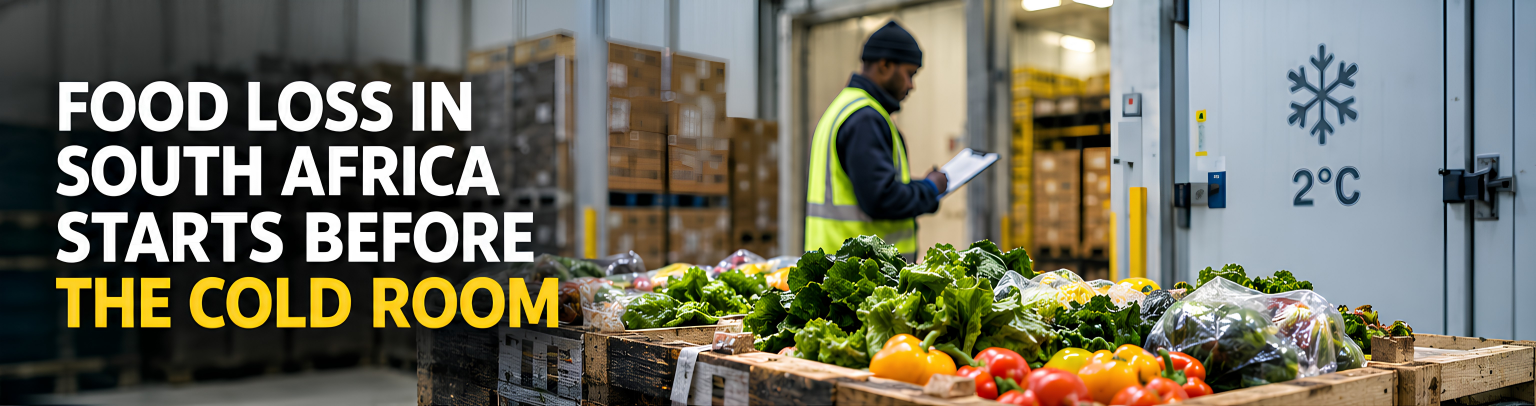
A pallet of fresh produce arrives at a cold store. The temperature is right. The receiving team does its job. The product looks fine. And yet its remaining life may already have been shortened. By the time the damage becomes visible, the business facing the loss may be several steps removed from the decision that caused it.
That was one of the more useful ideas to surface during a panel on People and Partnerships: Building the Human Infrastructure of Africa’s Cold Chain. The session brought together Dr Ikechukwu Opara of the University of the Western Cape, SA Harvest CEO Ozzy Nel and Cassandra Potgieter, SA Harvest’s Head of Strategy, Marketing & Communications, with Elvin Harris from the Chartered Institute of Logistics and Transport facilitating. The discussion was framed around postharvest losses, food security and the commercial opportunities available to the cold-chain sector.
 From left: Elvin Harris, Cassandra Potgieter, Dr Ikechukwu Opara and Ozzy Nel at the GCCA Africa Cold Chain Conference 2026, where they participated in the panel discussion People and Partnerships: Building the Human Infrastructure of Africa’s Cold Chain.
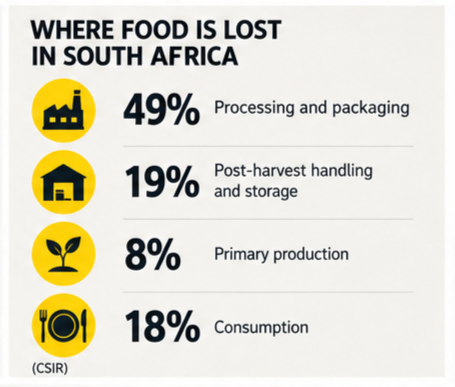
The numbers give the subject weight. CSIR’s national estimate puts South Africa’s annual food loss and waste at 10.3 million tonnes of edible food, equivalent to 34.3% of local production. Its research places 82% of that loss before the consumption stage. Processing and packaging account for 49%, post-harvest handling and storage for 19%, and primary production for 8%. Those percentages are useful, but the operating questions behind them are more interesting.
The GCCA discussion pointed to seven of those questions:
1. Postharvest loss can begin long before refrigeration
Dr Opara’s work examines what happens to fresh produce after harvest, including the effects of handling, temperature and storage.
Fruit and vegetables remain biologically active after they leave the field. Respiration continues. Moisture is lost. Mechanical damage can develop into visible deterioration later. Temperature exposure speeds some of these processes.That means the quality entering a cold room has a history.
A facility can maintain its set point and still inherit problems created hours or days earlier. Harvest practice, handling, packaging and the speed at which field heat is removed all influence what refrigeration has left to preserve.
During the panel, Opara put it starkly: “It doesn’t matter the sophistication of your cold storage or the cold chain. If the system is broken from the beginning…”
His research supports the broader point. Fresh produce losses are influenced by mechanical damage, storage and handling problems, breaks in temperature control, microorganisms and the product’s continued metabolic activity after harvest.
For cold-chain businesses, this widens the performance conversation. Receiving temperature tells you something important. It cannot tell you the entire history of the product. The useful questions start further upstream: How was it harvested? How long did it remain warm? How was it handled? When did cooling begin? Those hours can ultimately decide how many days remain.
2. South Africa loses much of its food before it reaches the consumer
Food waste is often photographed at the end of the chain: bins, plates, retailers clearing shelves, however South Africa’s data puts much of the loss earlier. CSIR estimates that 49% occurs during processing and packaging, 19% during post-harvest handling and storage, and 8% during primary production. Consumption accounts for 18%.
That changes the practical response substantially. Food left on a plate calls for different action from tomatoes damaged in handling. A production overrun requires a different response from stock approaching the end of its commercial window. Produce sitting at a wholesale market because demand has fallen presents another set of choices again.
Calling all of it “food waste” can obscure the point at which an intervention would have been cheapest and easiest. For supply-chain leaders, the stage of loss matters as much as the volume. That is where prevention becomes an operating question rather than an environmental statistic.
3. A full cold room can move the problem ten metres down the road
One finding from Opara’s recent fresh-produce-market study deserves particular attention from the cold-chain sector.
The researchers analysed three years of records from a major South African fresh produce wholesale market. Annual waste ranged from 9,124 tonnes to 17,969 tonnes, amounting to 38,626 tonnes across the three-year period. The percentage discarded was comparatively small (between 0.68% and 1.26% each year), but a small percentage of a very large throughput becomes a significant physical volume.
The research also describes what happens when cold-storage capacity is exhausted. During hotter periods, cold rooms at the market can operate at full capacity. Incoming produce may then remain in receiving areas at ambient temperature. Higher temperatures increase respiration, moisture loss and quality deterioration.
In 2021, the study recorded an unusually severe example: an extended power outage following cable theft left cold rooms and storage facilities without power for two weeks. 6,683 tonnes were discarded during the spring period in which the disruption occurred.
That is a useful reminder for infrastructure planning. The existence of cold storage matters. So do capacity, power continuity, receiving conditions and what happens when the cold room is full. A cold chain is only as effective as the moments when product falls outside it.
4. The commercial decision may matter as much as the temperature
The panel repeatedly returned to a decision familiar to anyone managing inventory: How long do you hold stock in the hope that it will still sell?
Food businesses are designed to extract commercial value from stock. That is entirely rational. But perishable inventory has a narrowing window.
Cold stores, distributors, manufacturers and retailers already hold much of the information required to see that window closing: stock age, orders, demand forecasts, remaining shelf life, rate of movement and warehouse capacity.
There is another layer to the problem. Companies can measure their own operations very well while the wider food chain remains fragmented. One company’s waste figure may use a different definition from another’s. Operational failures can carry commercial or reputational sensitivities. Researchers see only the data organisations are prepared to share.
The opportunity lies in agreeing what happens when those signals begin to line up. Potgieter described the value of mobilising stock earlier: “There’s definitely a salvageable commercial opportunity to get food mobilised sooner rather than waiting until the last minute.”
That idea has significant consequences for surplus food redistribution. A consignment released with several days of useful life offers options. Food-safety checks can happen properly. Receiving capacity can be confirmed. Transport can be planned. The right CBO can be matched to the product and volume. A consignment released in its final hours creates pressure everywhere.
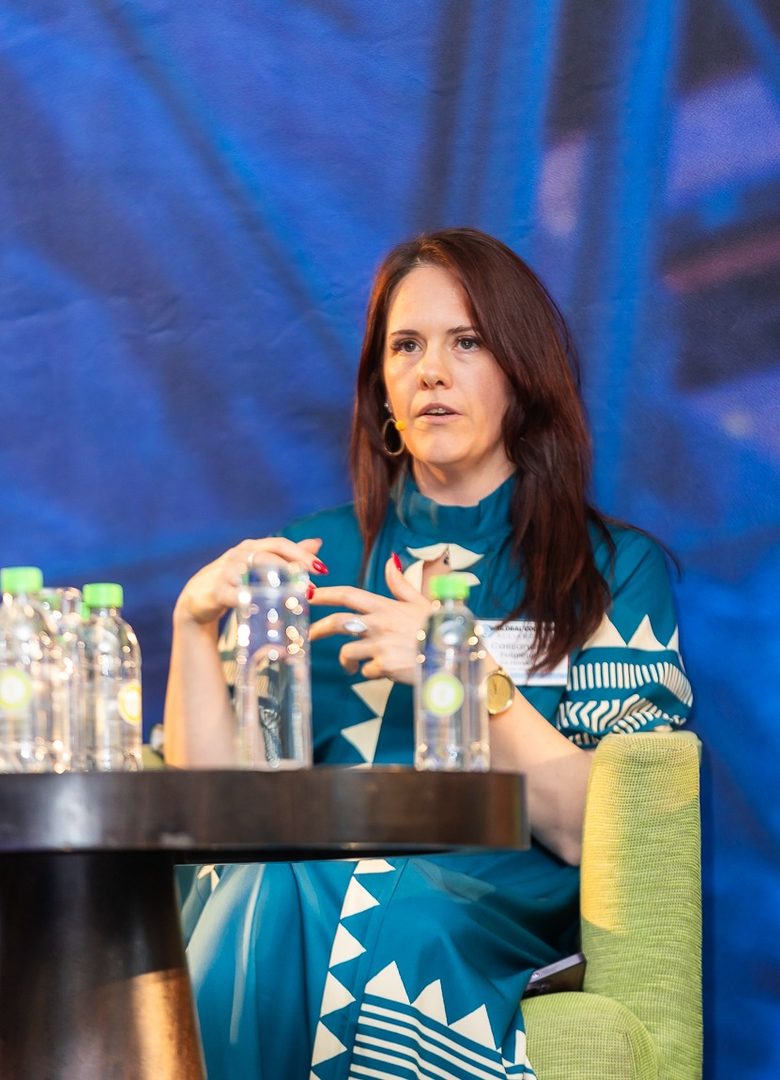 Cassandra Potgieter, Head of Strategy, Marketing & Communications at SA Harvest, highlighted the value of mobilising surplus food earlier, before commercial opportunities and useful shelf life are lost.
This suggests that the most useful food-rescue protocol may begin with a commercial trigger: an agreed point at which stock is flagged for another route while sufficient useful life remains. Food rescue then becomes part of inventory planning, range changes, production overruns and stock management.
5. Backhaul logistics could unlock food already stranded in the system
One of the best examples from the GCCA panel involved an asset freight business understand intimately: the returning truck. Empty kilometres create little value, yet vehicles are moving through South Africa’s food system every day, including refrigerated vehicles returning after deliveries.
Nel described using relationships with logistics businesses to match food needing transport with capacity already moving through the network. A citrus surplus discussed during the session could be connected with returning logistics capacity rather than requiring an entirely separate transport network.
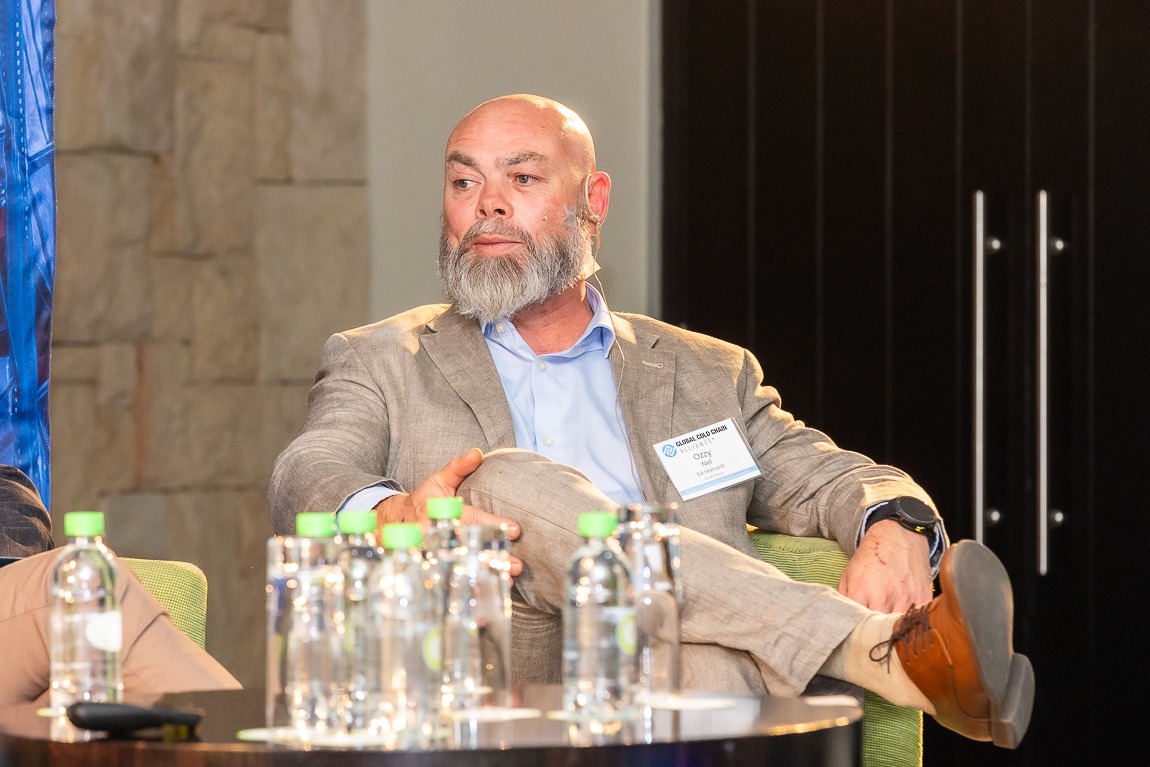 SA Harvest CEO Ozzy Nel highlighted how backhaul logistics and existing transport networks can unlock food already stranded in the supply chain, creating new opportunities for food rescue and food access.
The principle is simple. The execution requires good information. A usable backhaul depends on location, route, timing, vehicle specification, temperature requirements, product safety, handling capacity and the destination’s ability to receive it. When those pieces line up, the economics can change considerably.
South Africa already has trucks. It already has warehouses. It already has cold rooms, drivers, depots and sophisticated route-planning capability.
That existing capability is one reason logistics companies can become important partners in food rescue in South Africa. SA Harvest’s own model uses refrigerated and unrefrigerated vehicles, warehousing, cold storage, logistics systems and food-donor partnerships to move surplus through its network.
The panel’s challenge to the industry was unusually practical:
“You guys have been building systems for years and years.”
There is considerable food-access capability inside those systems already.
6. Food-loss data depends on trust between businesses
Cold-chain operators generate data constantly. Temperatures. Dwell times. Inventory movement. Delivery performance. Energy consumption. Stock age. Vehicle location. Capacity utilisation. Researchers can also build better models from those records. But access remains difficult. Opara told the GCCA audience that requests to study farms, packhouses and storage operations frequently meet resistance.
His summary was succinct: “You cannot manage what you cannot measure.”
Adding AI to the system will make analysis faster. The quality of the result will still depend on the quality and comparability of the inputs.
Progress therefore needs some decidedly human infrastructure: agreed definitions, reporting methods, confidentiality, relationships and enough trust for businesses to examine losses without treating every disclosure as an admission of failure.
A food system cannot learn much from information trapped inside individual silos.
7. The final cold-chain node may be a community kitchen
Food rescue has another capacity constraint that receives far less industry attention: The destination. A community-based organisations (CBO) receiving surplus food has operational limits just as a warehouse does. The GCCA conversation repeatedly returned to CBOs as active parts of the food-distribution chain. They receive, store, prepare and distribute food within communities they know closely.
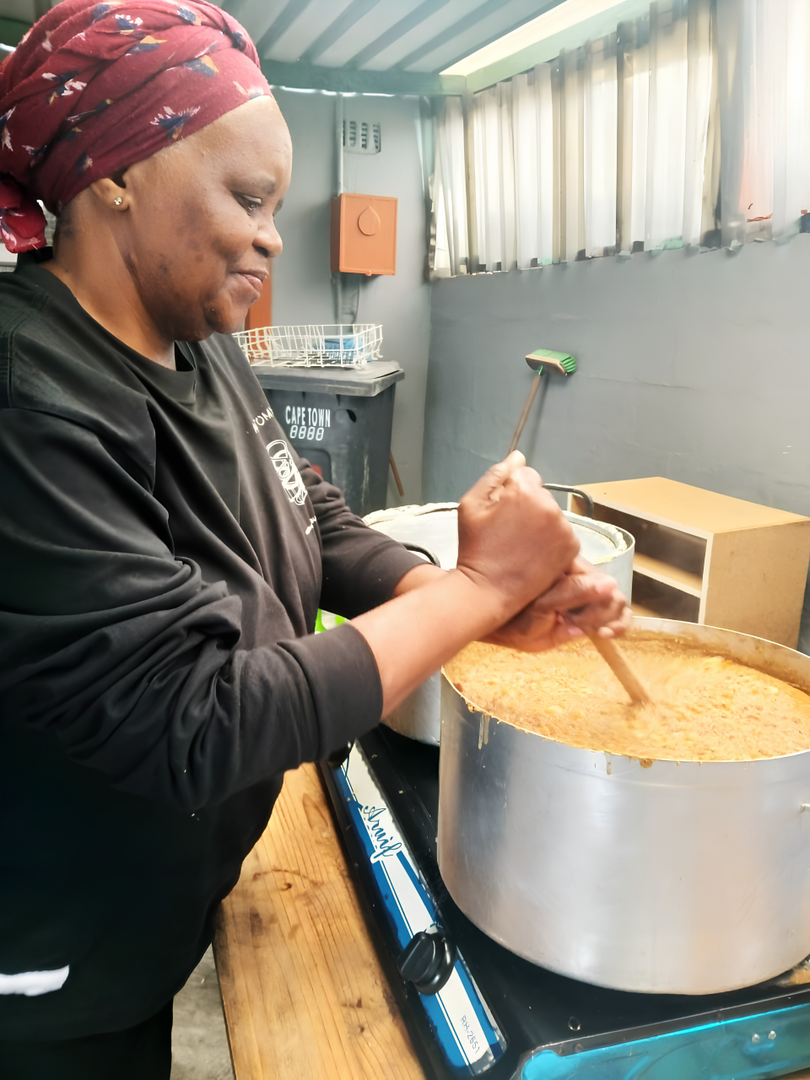 Food rescued through SA Harvest reaches communities through partners like Give Food Solutions, where ingredients that might otherwise go to waste are prepared and served as nourishing meals.
For SA Harvest, that last-mile network forms part of the infrastructure required for safe redistribution. Food needs to be identified, collected, sorted, stored and transported through a system that also understands what receiving community organisations can safely use.
A large food rescue can therefore fail through a mismatch of capacity even when the donor, truck and warehouse all perform well. The last mile deserves the same questions operators ask everywhere else: capacity, timing, safety, storage, throughput and demand.
Food rescue works better when the route exists before the surplus. This may be the strongest business lesson from the GCCA discussion. Food rescue becomes far harder when the first conversation happens after stock has become urgent.
An effective route is prepared earlier. Operations knows when to flag stock. Quality knows what can move safely. Finance understands the decision threshold. Logistics knows the collection possibilities. The redistribution partner understands likely volume. The CBO network has enough visibility to match food with receiving capacity.
SA Harvest has been arguing for this shift in its work on food-donation systems: safe surplus becomes useful when food safety, cold chain, warehousing, route planning, data, donor processes and community capacity connect.
The GCCA panel added something valuable to that argument. Many of the tools required to reduce food loss already exist inside the businesses moving food every day. The next gains may come from using them earlier and connecting them better.
- →For a cold-chain operator, the question may begin with the receiving temperature.
- →For a manufacturer, it may begin with an overrun.
- →For a farmer, it may begin at harvest.
- →For finance, it may begin when the probability of sale changes.
- →For a logistics company, it may be the return leg.
- →And for a food-rescue organisation, the job is to connect those moments while the food still has somewhere useful to go.
So, there is a worthwhile question for every food and logistics business after GCCA Africa 2026: Where in your own operation does recoverable value begin slipping away, and who sees the signal early enough to act?
Have Surplus Food in Your Supply Chain?
SA Harvest works with farmers, manufacturers, retailers, distributors and logistics partners to redirect quality surplus food to communities facing food insecurity.
Become a donor and help reduce food loss while creating meaningful social impact.
Learn More About GCCA
This article draws on insights from the People and Partnerships panel at the GCCA Africa Cold Chain Conference 2026.
The Global Cold Chain Alliance (GCCA) connects cold-chain businesses and experts to strengthen food supply systems worldwide.
→ Learn more about GCCA: https://www.gcca.org/about/