From warehouse floors and freezer wear to energy timing, open APIs and AI, GCCA Africa 2026 offered a practical test for future-proofing cold storage: can an operation still adapt when conditions change?
At the GCCA Africa Cold Chain Conference 2026 in Johannesburg, Adam Tocher, Senior Vice President, Global Market Engagement at the Global Cold Chain Alliance (GCCA), facilitated a discussion that kept returning to the parts of cold storage that are easy to overlook when the industry talks about the future.
The panel brought together Hendrik Cloete, General Sales Manager at Technoswitch; Brandon Horne, Area Sales Manager for Southern Africa at EFAFLEX; James Cunningham, Managing Director of Barpro Storage; and Jan-Cornell van Ekris, Co-Owner and Managing Director of Boltrics.
Their companies work across fire detection, industrial doors, storage design and warehouse technology. The conversation ranged widely, yet a common idea kept surfacing: the quality of tomorrow’s cold chain will be shaped by decisions that look ordinary today.
Here are seven ideas worth taking back to the warehouse, the design table and the boardroom.
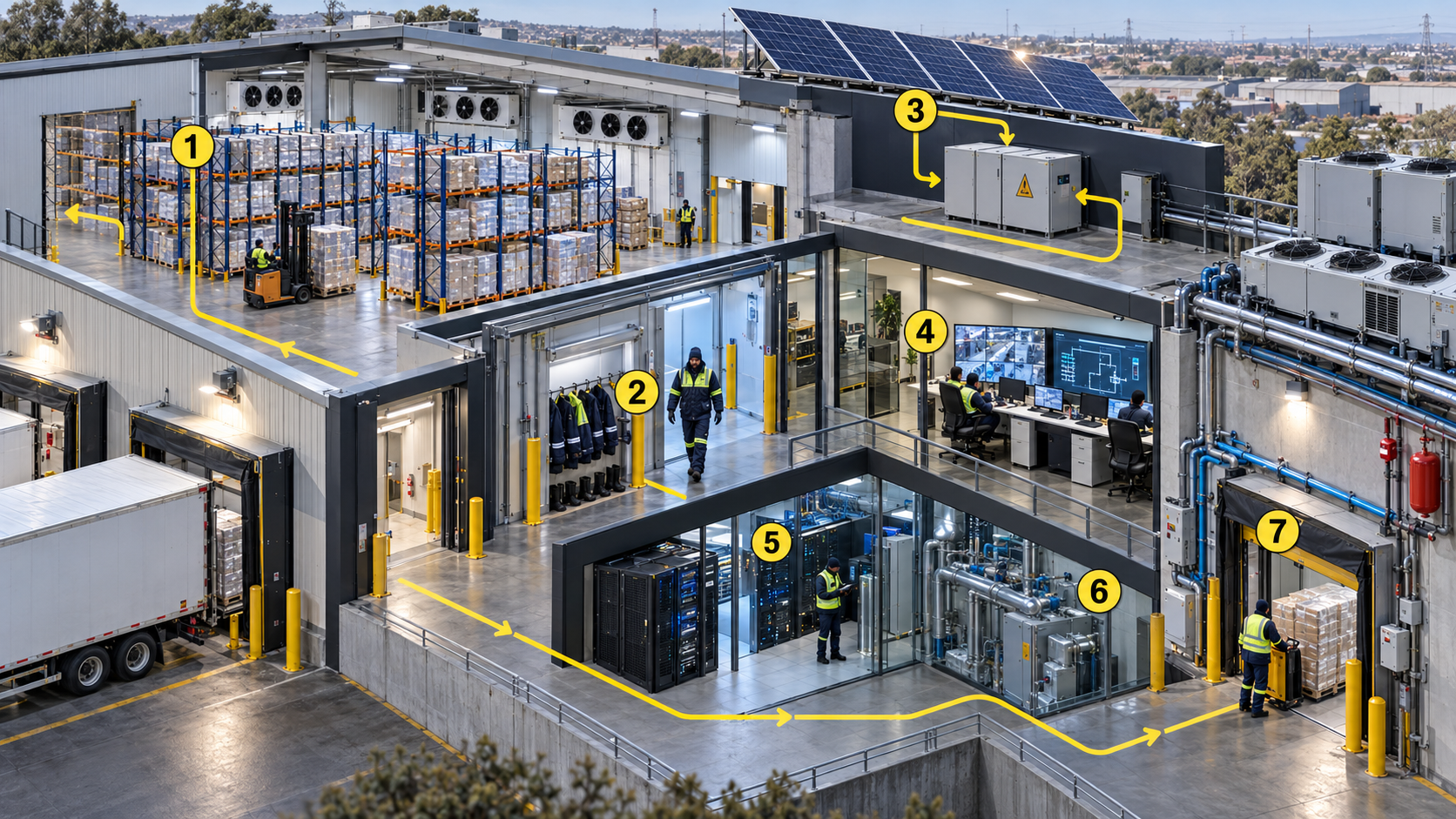 A visual representation of seven connected decisions that shape an adaptable cold-chain operation, from infrastructure and worker comfort to energy, technology and coordinated engineering.
Start with the floor
When the panel was asked which early decision operators cannot afford to get wrong, James Cunningham’s answer took only a moment.
“The floor.”
Barpro Storage has spent decades working inside cold-storage facilities, and Cunningham’s point was deliberately basic. Floors, insulation, height, racking, access and circulation become much harder to alter once the building is live.
He offered another question for anyone planning a new facility: where will the next cold store go? Developers often assume the first one will never fill. His experience suggests that expansion should be considered while the site still exists on a drawing.
Van Ekris made the same argument from the technology side. Software choices accumulate history too. Heavy customisation can serve an operation well for years and then become a constraint when customers, platforms or integration requirements change.
The practical lesson is simple: build with alteration in mind. That applies to concrete and code.
Worker comfort belongs in the productivity calculation
Cold-store efficiency is usually discussed in kilowatts, pallet positions and throughput. The panel added another variable: the person working at minus 20 or minus 30 degrees.
Cunningham spoke about specialist freezer clothing and how suitable protection affects the amount of time people can work effectively in low-temperature environments. Brandon Horne connected the same human question to door speed: quicker entry and exit can reduce temperature loss while also changing the time people and forklift operators spend moving between difficult environments.
EFAFLEX specialises in high-speed industrial doors, which made Horne’s point especially concrete: the door is part of the energy system, the traffic system and the working environment at the same time.
Employee comfort often sits under HR or health and safety, while operational efficiency sits elsewhere on the spreadsheet. Inside a freezer, that separation becomes artificial. Clothing, ergonomics, travel distance, picking configuration and exposure time all surface somewhere in output.
Cold-store design works through human beings as well as machinery.
Energy efficiency can be a question of timing
South African operators have good reason to think about solar. Cunningham asked the room to consider another possibility alongside it: thermal storage using eutectic or phase-change material.
The idea is to use refrigeration more intensively during favourable electricity periods, store thermal capacity, and then reduce plant demand during more expensive periods. Cunningham cited indicative savings of at least 15%, while also making clear that he wants the concept tested in a medium-sized South African cold store.
That caveat matters. The value of the idea lies in the question it introduces. Cold stores already work hard to reduce how much electricity they consume. Thermal storage asks operators to pay closer attention to when they consume it.
Hendrik Cloete of Technoswitch brought a second consideration into the energy discussion. Rooftop PV, batteries and additional electrical infrastructure change the facility’s fire-risk profile. Protectowire FireSystems and other detection technologies therefore sit inside the same engineering conversation as energy resilience.
A change to one part of a cold store can alter the risk carried by another. That is why energy, fire protection and operations need to be designed together.
More information can make a warehouse harder to run
Every new piece of equipment seems to arrive with an app, portal or dashboard. Cloete put the problem neatly:
“Do you want to end up with ten apps or one app?”
Fire systems, refrigeration plant, doors, warehouse software and building-management systems can all generate information. Modern integration makes it possible to connect more of it. The harder question is what an operator can actually use.
Cloete warned against systems that produce more information than the people running the facility can interpret. Sometimes a simple status signal is enough. A control room full of data can still leave someone unsure about what requires action.
A useful test for every integration is: what decision will this information help somebody make? If the answer is vague, another dashboard may be adding work.
Good software can still cost you a customer
One of the sharper stories came from Jan-Cornell van Ekris.
He described a logistics provider with a capable warehouse-management system. Then a customer upgraded its ERP and wanted modern, real-time API integration. The existing WMS could not accommodate the change quickly enough. According to van Ekris, the system was eventually replaced. Boltrics builds logistics software for warehousing, transport and cold logistics, so his conclusion was commercial rather than abstract.
“The cost is big. But losing customers and not being able to follow is much bigger.”
Compatibility had become a customer-retention issue. Open APIs, upgrade paths and a vendor’s ability to keep pace with changing technology may look technical during procurement. Their value becomes clearer when a major customer is waiting for an answer.
A system can be fit for today’s operation and still make the next change unnecessarily expensive.
AI starts with boring work
Eventually the discussion reached artificial intelligence. Van Ekris was wary of beginning with the question: where can we put AI?
“Look to your data. Clean data, that is very important.”
The point matters as AI moves into demand forecasting, inventory management, maintenance, routing and warehouse planning. Product records still need to be accurate. Processes still need to make sense. Systems still need to communicate. People still need to know which operating problem they are trying to solve.
The work before AI is ordinary. It is also the work that determines whether AI produces anything useful.
That principle is familiar in food rescue too. SA Harvest’s technology and traceability work depends on reliable data about where food is collected, stored and delivered. Better information matters when it leads to better movement and better decisions.
Simplicity is an engineering discipline
A theme kept returning throughout the session: resist unnecessary complexity. Do not collect information nobody can use. Avoid customising technology until upgrades become a major project. Match automation to the people expected to operate it. Bring doors, detection systems, racking, refrigeration and software into the conversation before the building has already decided the answer.
Horne’s advice was to get the relevant players into the room early:
“Start with a dialogue.”
A few hours of discussion during design can save months of inconvenience later. The insight goes beyond supplier coordination. Cold-chain performance is created in the interfaces between systems: people and equipment, energy and fire risk, software and customers, storage density and movement.
Knowing what deserves sophistication and what should remain simple is part of good engineering.
Africa’s advantage may be room to build differently
Towards the end of the discussion, Adam Tocher reflected on a perception he encounters internationally: that Africa is too difficult a place to build and operate cold-chain businesses. His experience has been different. He described operators across the continent as among the more innovative he has encountered.
That observation matters because parts of Africa are still adding cold-chain capacity at scale. New infrastructure carries capital, energy and execution risk, but it also gives operators choices. A new facility can be taller. Expansion can be planned earlier. Energy systems can be designed around local constraints. Software can be chosen with future integration in mind. Human movement can be considered before the racking arrives.
Where this connects to food access
For SA Harvest, these questions extend beyond warehouse economics. Food rescue depends on time, temperature, transport, warehousing, route planning and reliable handover. Edible surplus has value only while the system can still move it safely.
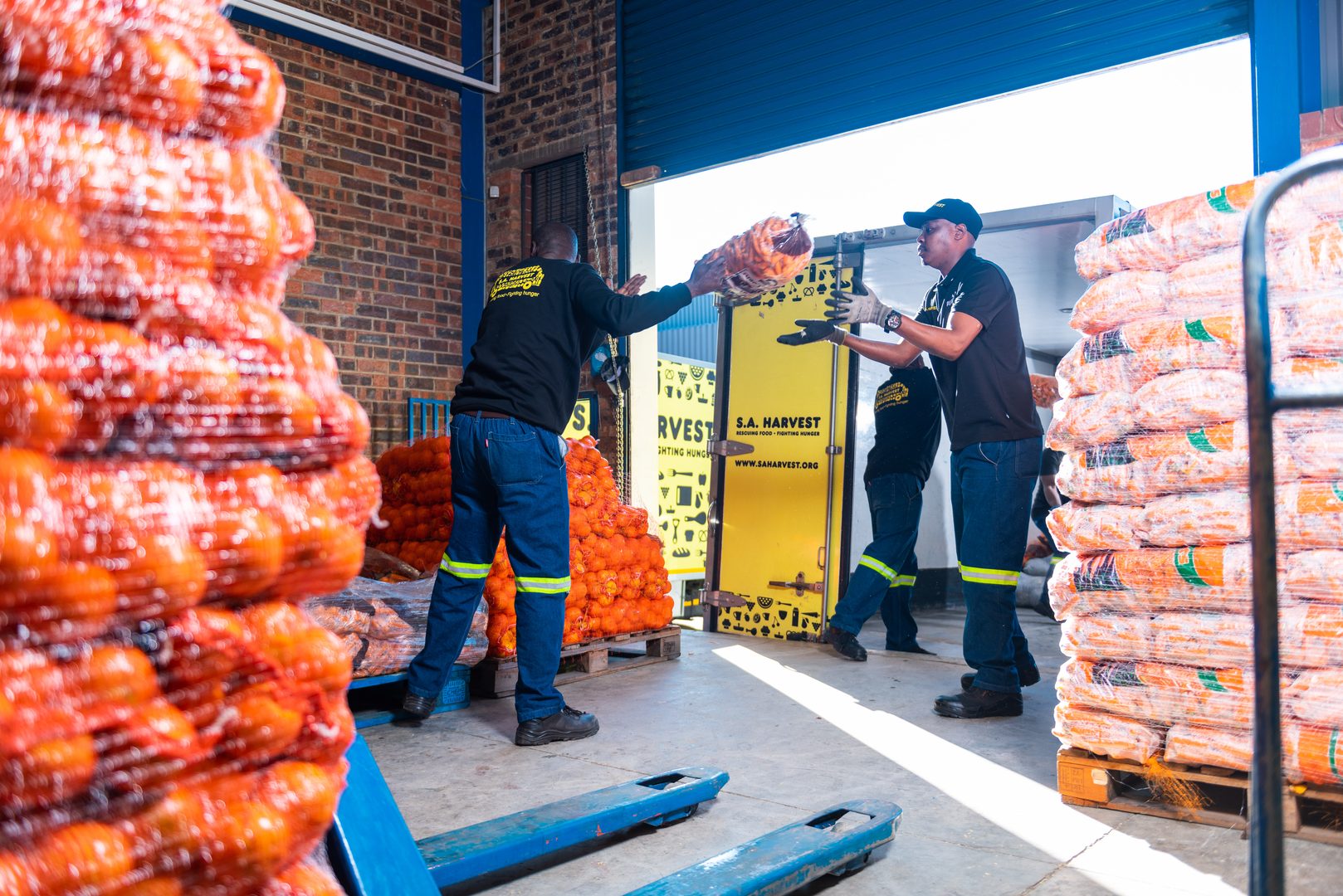 SA Harvest’s Johannesburg team loading bags of vegetables into an SA Harvest truck for delivery to beneficiary organisations.
Recent SA Harvest work with surplus citrus shows the same operating reality: transport reach, storage, strategically located bins and rapid turnaround can determine how much good food can be recovered before time closes the window.
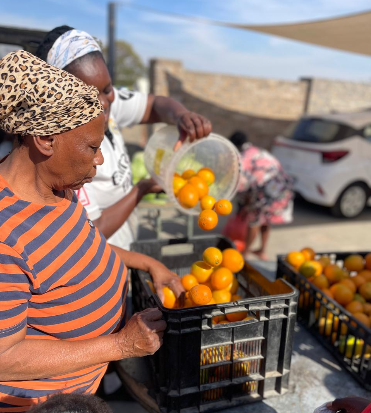 Surplus citrus being prepared for distribution at an SA Harvest beneficiary organisation in Alexandra Township.
The discussion at GCCA Africa 2026 therefore lands on a useful idea for the wider food system. Cold-chain infrastructure protects commercial value, food quality and the time available to find the next viable destination for food.
The future will remain difficult to predict. Facilities can still be designed to leave room for change.
If demand, technology or the operating environment changed faster than expected tomorrow, which decision made today would make it hardest to respond?
Help SA Harvest rescue and deliver more nutritious food to communities across South Africa.