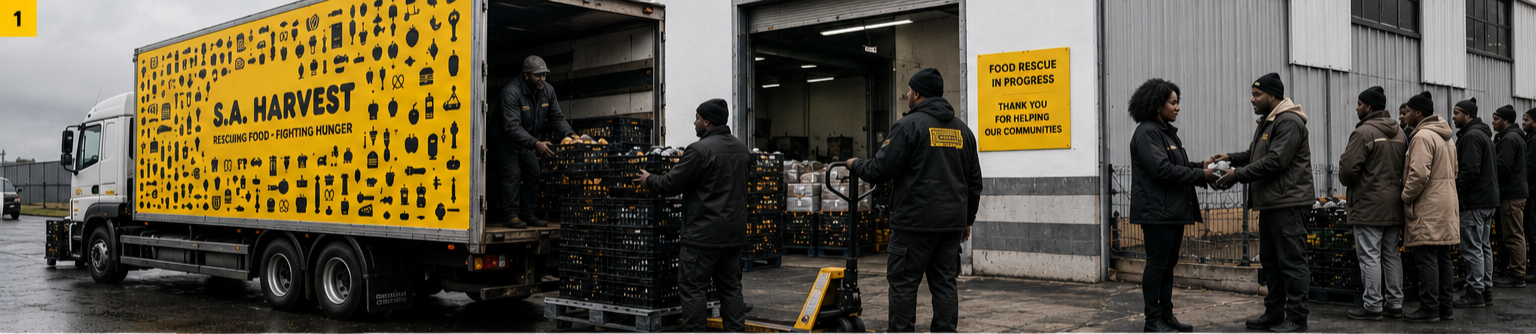
A keynote address at a logistics convention can sometimes sound far removed from everyday life: port performance, freight corridors, rail reform, border delays, truck staging facilities, infrastructure budgets, compliance and enforcement.
But transport policy does not stay in government documents or boardrooms. It affects how goods move across South Africa, how businesses operate, and ultimately how people access food, services and economic opportunity.
The keynote address delivered by Deputy Minister of Transport Mkhuleko Hlengwa at the Road Freight Association Convention highlighted a simple but important reality: road freight is not a side issue in South Africa’s economy. It is one of the country’s most important working arteries.
Why Transport Policy Affects Everyday South Africans
Transport policy becomes visible on the N3. It becomes visible outside the Port of Durban. It appears at the Lebombo border post, on municipal roads, in freight corridors and in the cost of moving goods.
It affects whether a truck arrives on time, whether a driver is safe, whether cargo is delayed and whether businesses can continue operating efficiently.
The Deputy Minister’s keynote addressed many of the pressures facing the logistics sector, including rail capacity constraints, port congestion, customs and border delays, deteriorating road infrastructure, rising logistics costs, overloading, safety concerns and the shortage of truck stops and staging facilities.
Around Durban alone, thousands of vehicles use key port access routes every day, placing significant pressure on infrastructure and freight corridor efficiency.
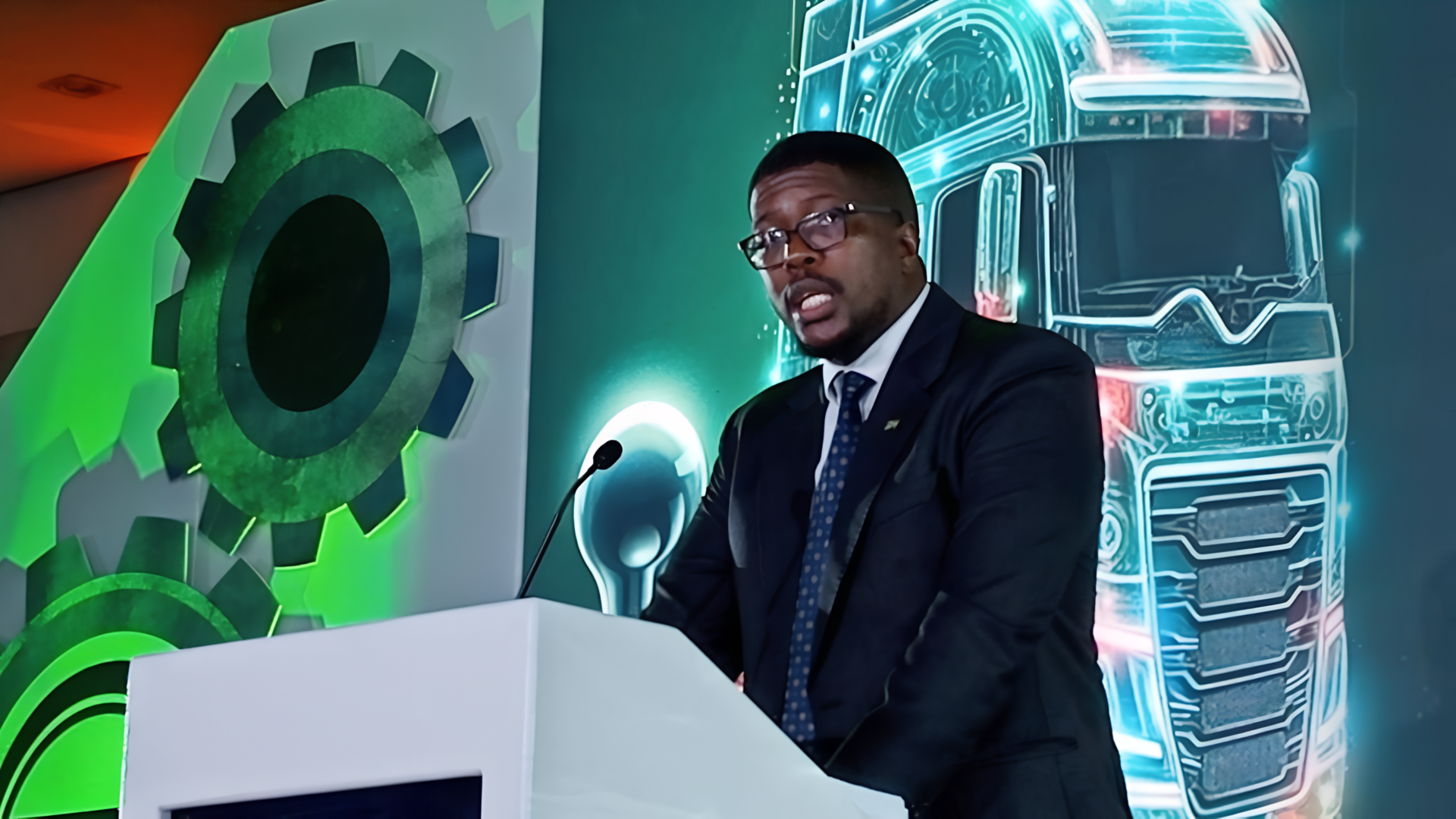 Deputy Minister of Transport Mkhuleko Hlengwa addresses delegates at the RFA Convention 2026, where he stressed the need for continued engagement between government and the road freight sector to build a more efficient transport system. Source: RFA LinkedIn
The Link Between Road Freight and Food Access
For SA Harvest, these challenges are more than industry concerns. They directly affect food rescue operations.
Food rescue is not simply about whether surplus food exists. It is about whether systems can move that food quickly, safely and responsibly to communities that need it.
A retailer may have quality surplus food available. A manufacturer may have stock that can still nourish people. A farm may have produce that cannot enter the commercial market.
At the same time, a community kitchen may urgently need food.
Between surplus and need sits the real work: collection windows, vehicles, drivers, warehouses, cold-chain management, route planning, fuel, road conditions, safety protocols, documentation and trusted last-mile delivery partners.
That is logistics.
Why Road Freight Remains Essential
The Deputy Minister emphasised that road and rail must complement each other.
South Africa needs a stronger rail network, particularly for long-haul freight, bulk commodities and high-volume cargo movement. However, road freight remains essential for first-mile and last-mile logistics, urban distribution, regional trade and time-sensitive deliveries.
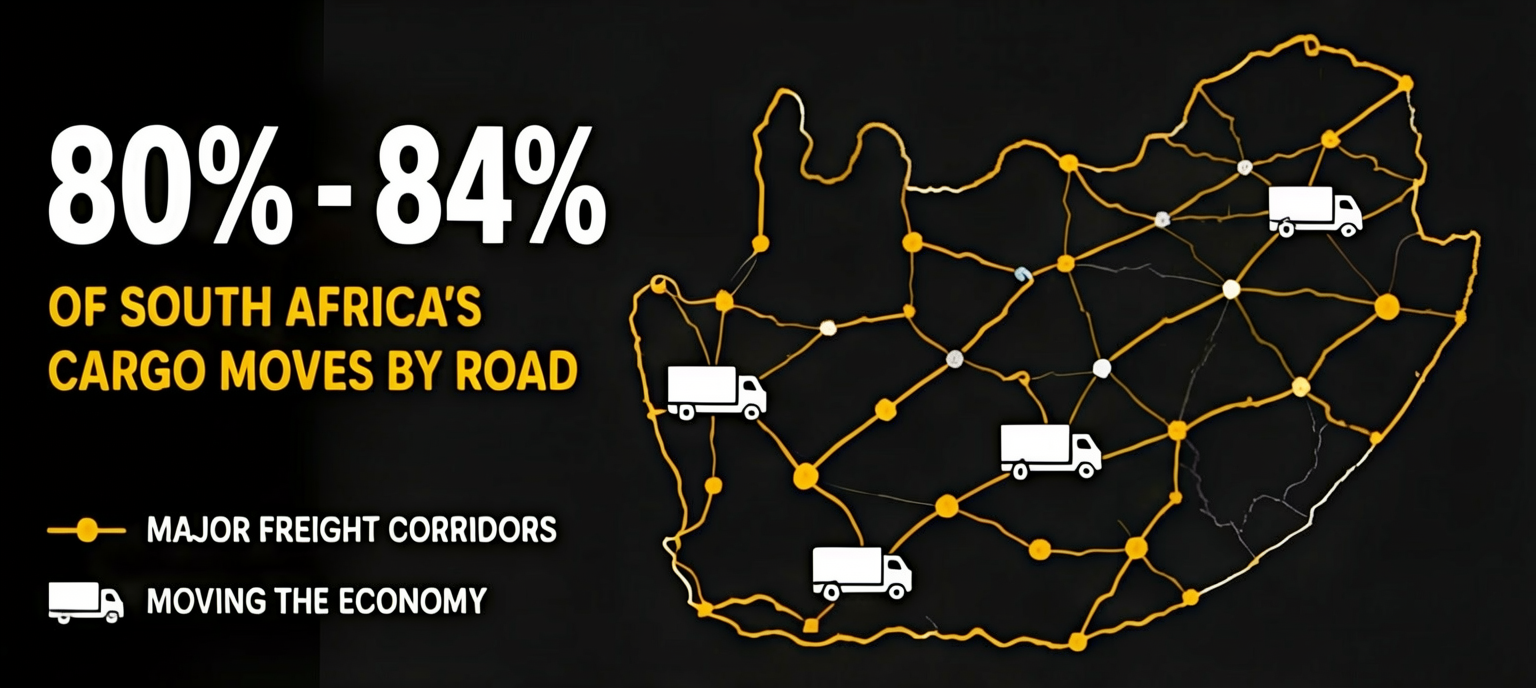
The keynote noted that road freight still moves approximately 80% to 84% of South Africa’s cargo by tonnage.
That statistic matters.
When road freight slows down, manufacturers feel it. Retailers feel it. Exporters feel it. Ports feel it. Households feel it.
And in food rescue, the consequences are immediate.
Fresh produce cannot wait for systems to recover. Cold chain cannot be treated as optional. A delayed route can mean the difference between food becoming access and food becoming waste.
Food Rescue Depends on Strong Logistics Systems
This is where SA Harvest’s work intersects with the national transport conversation.
We are not operating outside the logistics system. We are dependent on it.
More importantly, we demonstrate what becomes possible when logistics is used as social infrastructure.
A truck is not just a truck when it transports rescued food.
A warehouse is not simply a storage facility when it protects food safety and quality.
A route is not merely a route when it connects surplus food with a community kitchen.
A driver is not just a driver when their work helps keep nutritious food moving to people who need it most.
The People Behind the Supply Chain
The keynote also highlighted the importance of driver wellness, truck stops, staging facilities, compliance and road safety.
That focus matters.
Too often, logistics discussions focus on freight as though goods move themselves.
They do not.
People move freight.
Drivers, mechanics, dispatch teams, warehouse staff, planners, border officials, traffic authorities, law enforcement officers, CBO coordinators and logistics managers all play a role in keeping South Africa’s transport system functioning.
The Deputy Minister’s strongest reminder was that transport must ultimately be about people: the people working within the system, the people whose livelihoods depend on it and the people who experience the consequences when systems fail.
Turning Logistics Into Social Impact
For SA Harvest, food rescue is not charity with a vehicle attached.
It is a practical response to a systems failure.
South Africa has food.
South Africa has need.
The gap between the two is often infrastructure, coordination and movement.
That is why partnerships with freight operators, logistics providers and cold-chain specialists are so important.
When logistics companies help move surplus food, they are applying their expertise to one of South Africa’s most solvable challenges.
When funders support fuel, warehousing, cold rooms and fleet capacity, they are helping transform surplus into access.
When government improves roads, border efficiency, freight data and port performance, it strengthens more than trade. It strengthens the systems that allow food, medicine, goods and livelihoods to move.
The Last Mile Is Where Policy Becomes Real
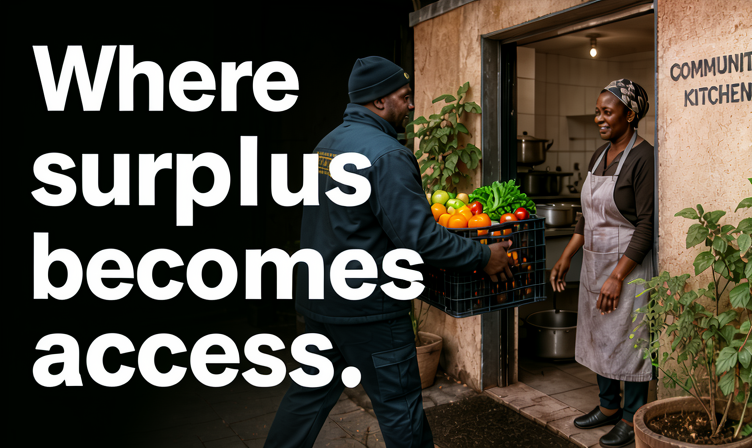
The last mile is where transport policy becomes real.
It is where a national freight strategy either reaches people or remains an idea on paper.
For food rescue, the last mile is where good food finally becomes useful.
South Africa does not need road and rail to compete in theory. It needs every part of the logistics system to perform its role effectively.
Because when transport works, the economy moves.
And when food rescue logistics work, care moves too.
Food rescue relies on the same systems that power trade, economic growth and community resilience. Stronger logistics systems do more than move goods – they help ensure that surplus food reaches people instead of landfill.
Food rescue is climate action. Learn more in our Food Waste Has a Climate Cost campaign.