SA Harvest remembers Daily Maverick journalist Estelle Ellis, whose reporting on hunger and failing public systems did more than expose problems. It connected people, organisations and practical action, and reminded us what can happen when someone refuses to look away.
Estelle Ellis believed journalism should do more than describe a broken system. It should make it harder to ignore.
Across the Eastern Cape, she reported on failing hospitals, communities without reliable water, child malnutrition and hunger with the persistence of someone who understood that behind every statistic was a person living with its consequences.
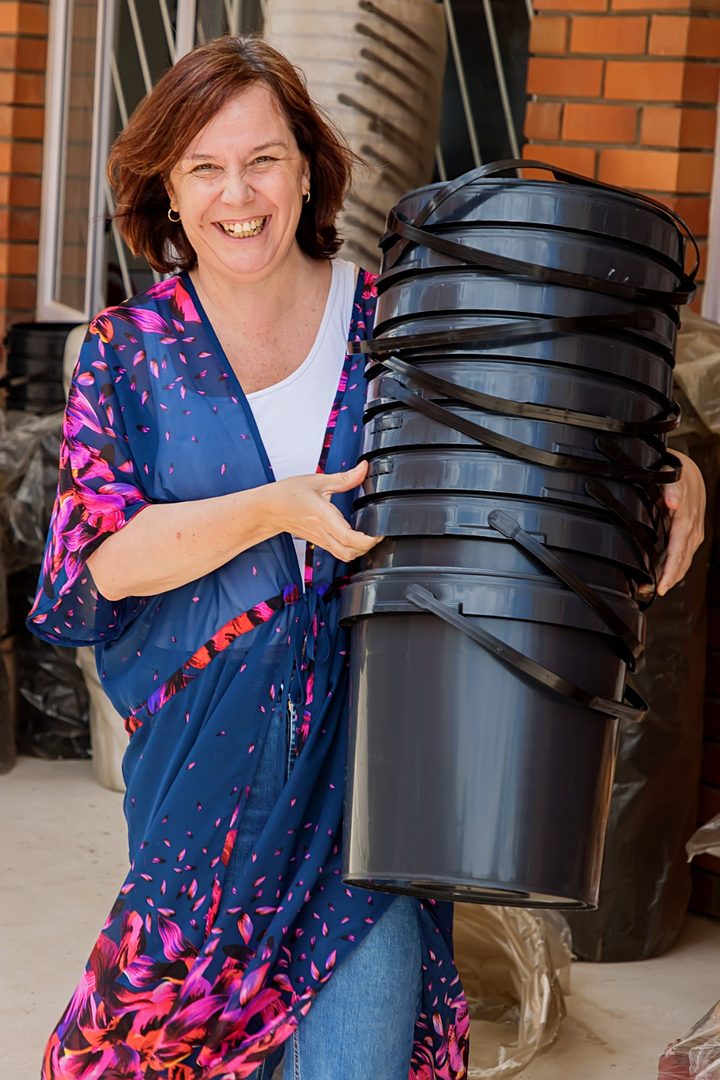 Estelle Ellis preparing for a Buckets of Nutrition packing day in Port Elizabeth – her energy and joy reflecting the spirit of service behind every SA Harvest activation.
She asked difficult questions of people in power. She stayed with stories long after public attention might have moved on. And alongside the question every good journalist asks – what is really happening here? – Estelle seemed always to carry another: What can be done?
That question is how her path became intertwined with SA Harvest’s.
A journalist who expected something to happen
Estelle was never interested in vulnerability as spectacle. Her reporting found the person behind the number, the family behind the headline and the institutional failure behind an individual crisis. She understood that hunger, poor healthcare or a lack of clean water rarely existed in isolation. They were symptoms of systems that were not working as they should.
It is an understanding SA Harvest shared: Hunger is not only a story about whether food exists. It is also about whether people can access it; whether food can be moved where it is needed; whether schools, community organisations and public services are functioning; and whether the infrastructure connecting supply to people holds when families need it most.
In December 2023, that became very real. As schools closed for the holidays in the Eastern Cape, many children who depended on school nutrition programmes faced weeks without the meals they received during term.
Estelle and Daily Maverick turned their attention to the problem. SA Harvest had the operational infrastructure and community relationships to respond.
What followed showed what can happen when journalism, public participation and logistics meet. Daily Maverick appealed to its readers. SA Harvest identified families, coordinated the food and managed distribution across targeted Eastern Cape communities. SA Harvest’s 2023 annual report records 1,702 families reached through that response.
But the significance of the collaboration went beyond one December.
When attention became practical action
The idea evolved into a recurring partnership. Through the Buckets of Nutrition campaigns, Daily Maverick readers helped turn concern into something tangible: food and essential items reaching families at times when ordinary support systems were under particular pressure.
In December 2024, a further collaboration focused on the families and caregivers of hospitalised children. More than R1 million in public contributions was mobilised, with buckets distributed through hospitals and clinics in Gqeberha, Johannesburg, Durban and Cape Town.
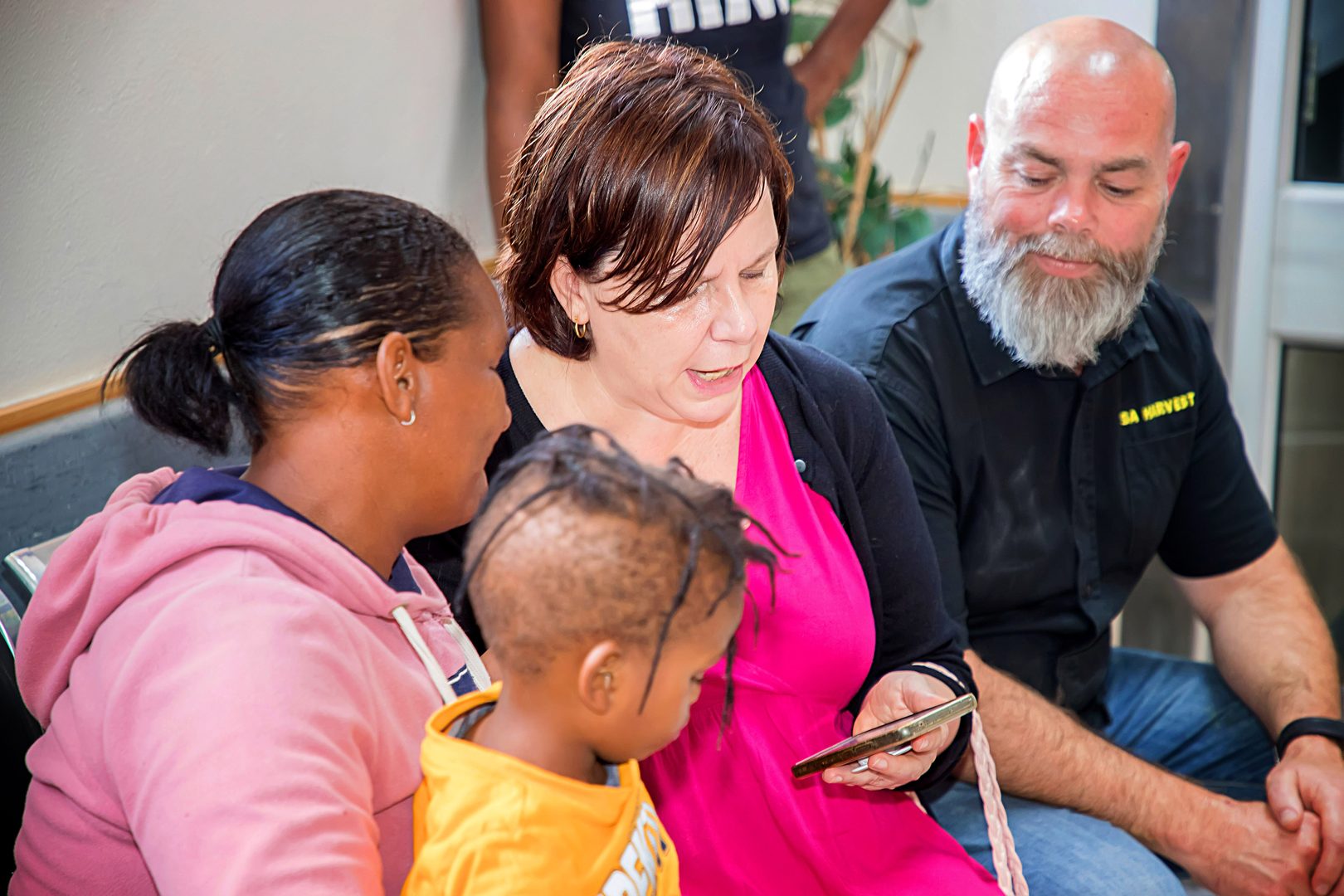 Estelle Ellis with SA Harvest CEO Ozzy Nel at the Provincial Hospital in Port Elizabeth, recording a mother and baby’s details during a Buckets of Nutrition drop‑off for oncology families.
By the following year, Daily Maverick described the annual collaboration as having reached more than 4,000 families over the preceding two years. Those numbers matter. But they do not fully explain what made Estelle’s contribution distinctive.
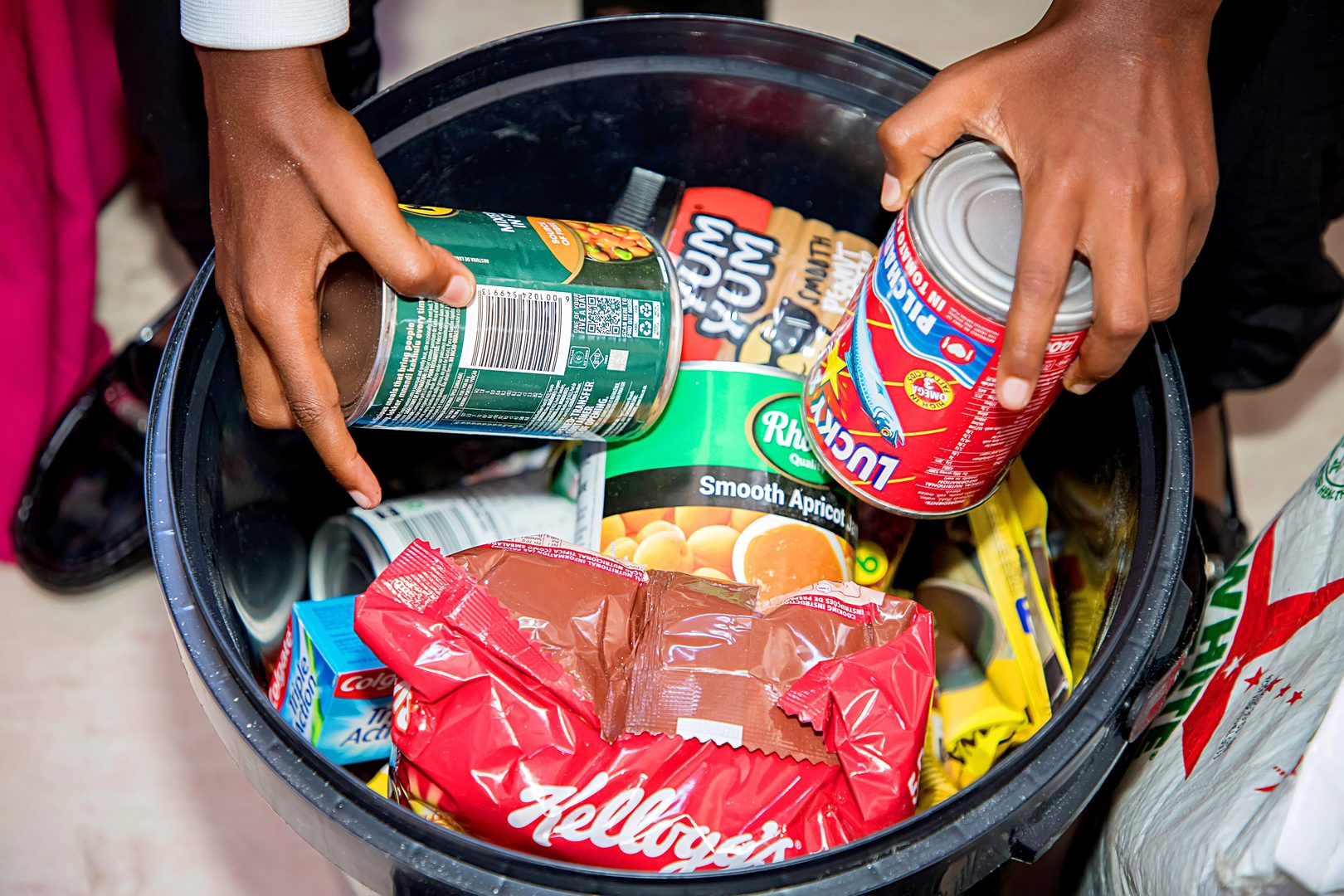 Essential food and household items being packed into Buckets of Nutrition – a campaign Estelle Ellis helped bring to life through her journalism and advocacy.
Her instinct was to connect. A story could connect a community to public attention. Public attention could connect an organisation to a problem. An organisation could connect infrastructure, resources and people who knew how to respond.
Daily Maverick’s own remembrance of Estelle records one striking example beyond SA Harvest: her reporting on a village without water eventually resulted in Gift of the Givers sinking a borehole.
That was the pattern: See the problem. Tell the truth about it. Keep asking questions. Bring people into the conversation. Refuse to accept that nothing can be done.
The impact of ordinary people
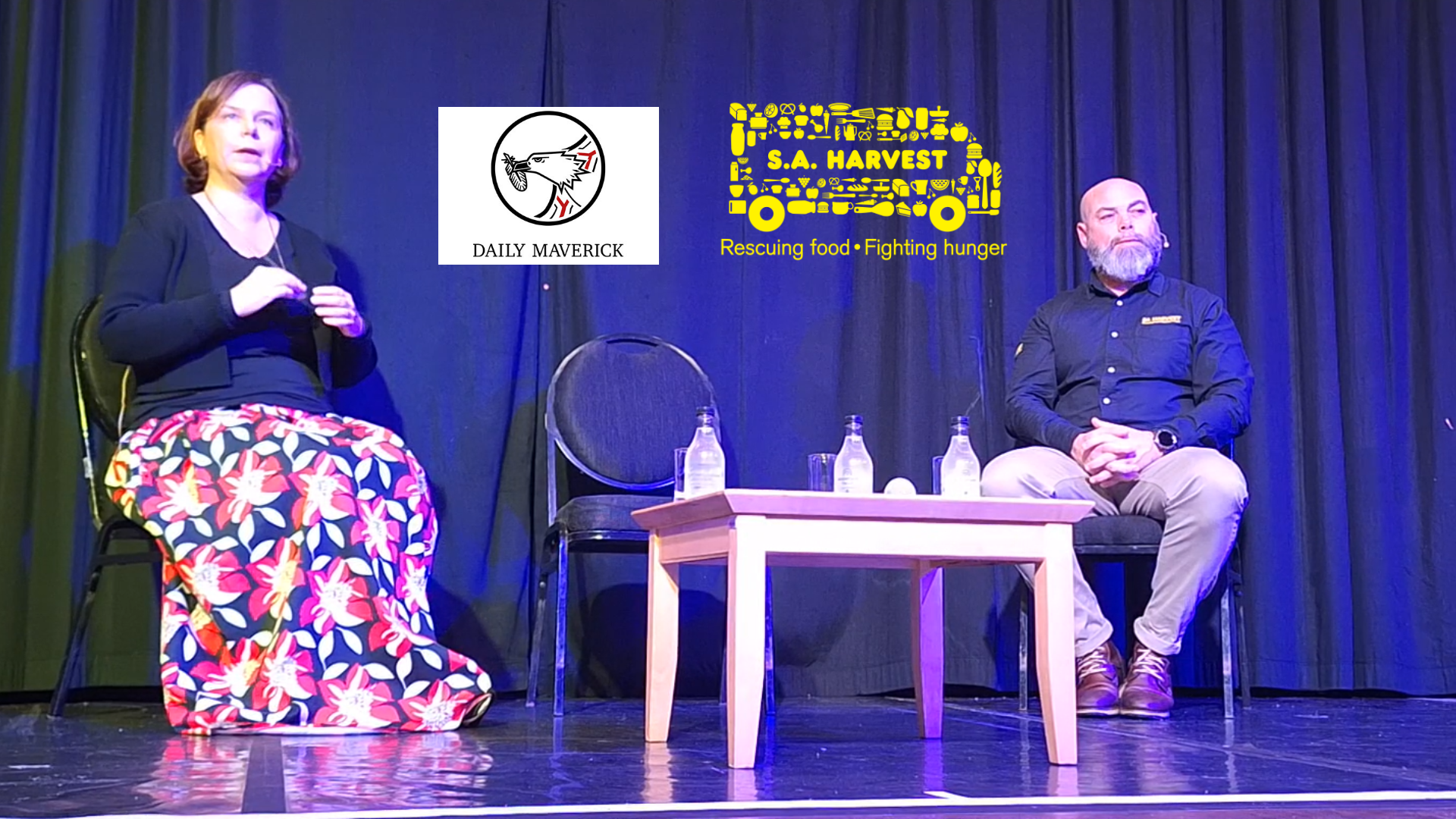 Estelle Ellis and SA Harvest CEO Ozzy Nel in conversation at the Hermanus FynArts Festival during the Daily Maverick WAKE UP series, discussing “The Impact of Ordinary People.”
In June 2025, Estelle and SA Harvest CEO Ozzy Nel sat together at the Hermanus FynArts Festival for a Daily Maverick WAKE UP conversation called The Impact of Ordinary People.
The discussion was about agency: what happens when ordinary people choose to show up, act consistently and take responsibility for the part of a problem they can influence.
Estelle spoke about the power of simply being present, of listening, witnessing and staying with people when there were no easy answers. It was an idea that captured something fundamental about her journalism.
Change did not always require a heroic intervention. Sometimes it began with someone showing up. Then showing up again.
That same philosophy sits at the heart of effective food access. A meal does not appear because someone cares about hunger. It reaches someone because many parts of a system work: food donors, warehouses, drivers, route planning, community-based organisations, kitchens and people prepared to keep showing up.
Estelle understood the human side of that system instinctively. She understood that the people closest to a problem are rarely passive characters waiting to be rescued. They are community leaders, caregivers, healthcare workers, organisers and neighbours already doing the work.
Sometimes what they need is for someone else to see them. And then to make sure others see them too.
What happened after the story
Estelle’s legacy lives in an extraordinary body of journalism, but for those at SA Harvest who had the privilege of working alongside her, it also lives somewhere else.
It lives in what happened after people read her stories. In families reached because readers responded. In organisations that found one another because a connection was made. In problems that became harder to ignore because she would not stop asking questions. And in the reminder that attention, when connected to functioning systems and people willing to act, can become something much more powerful than sympathy.
During Women’s Month, it feels fitting to remember Estelle, not simply because she was an exceptional woman in South African journalism, but because of the way she used her voice. She demanded accountability without losing sight of humanity. She recognised dignity where systems had failed to protect it. And she understood that hunger was never only about food.
It is about whether systems work. Whether people are seen. Whether institutions are held accountable. And whether somebody keeps asking the next question.
Perhaps that is the part of Estelle’s legacy all of us can carry forward: ask the difficult question, find the person behind the statistic, connect the people who can act. And, when a system is failing people, refuse to look away.
For those who want to read more about Estelle’s extraordinary impact, see Daily Maverick’s remembrance: Estelle Ellis, the Eastern Cape’s fiercest voice for the voiceless, has died and In Memoriam: Estelle Ellis, Daily Maverick’s ‘lisquito’-in-chief, is laid to rest.