At the Global Cold Chain Alliance Conference Africa 2026, Warwick Lord and Elvin Harris turned a conversation about roads, rail and ports into a harder question: what happens when every part of a supply chain makes sense on its own, but the corridor still fails to flow?
If you are moving temperature-sensitive cargo from Johannesburg to Durban, the commercial instinct is understandable. Keep the journey direct. Minimise handovers. Maintain control over the product. Know who is responsible if something goes wrong. For many cargo owners, that means putting the load on a truck.
Multiply that decision across hundreds of companies and the consequences begin to show up elsewhere: on the N3, at port gates, in queues, in lost vehicle hours and in the cost of moving goods through the economy.
That tension ran through a discussion on regional corridors at the GCCA Africa Conference 2026 between Warwick Lord, Inland Port Developer and Chartered Accountant working across land development and logistics, and Elvin Harris, President of the Chartered Institute of Logistics and Transport.
Lord approached the problem largely from the mechanics of freight: cargo density, inland ports, congestion, rail-road integration and commercial incentives. Harris brought the wider corridor view: institutional coordination, infrastructure history, regional alignment and the stubborn distance between transport policy and implementation.
A key insight with implications well beyond freight was highlighted: Africa’s logistics challenge is also about how the pieces work together.
A sensible decision for one cargo owner can make the network less efficient
One of Lord’s strongest observations concerned a basic feature of commercial behaviour. Every cargo owner is trying to make the best possible decision for their own shipment.
“Each individual company or cargo owner making the best decision for themselves ends up with congestion.” There is nothing unusual about that behaviour. A truck offers flexibility. It can move point to point. It reduces transfers. Responsibility is easier to trace. When rail services are unreliable or the interfaces around them create additional risk, road freight becomes the obvious choice.
The problem appears when the network absorbs hundreds of individually sensible choices. Roads become crowded. Port approaches slow. Trucks queue. Equipment spends more time waiting and less time moving. The cost eventually finds its way back into the supply chain.
For cold-chain operators, the stakes are higher. A delayed pallet of canned goods and a delayed load of fresh produce do not carry the same commercial risk. Time affects shelf life. Temperature excursions affect quality. An uncertain handover can become a food-safety issue.
That makes corridor performance part of product integrity. The industry therefore has to ask a broader question than what works best for this load today? It also has to ask what repeated decisions are doing to the network everybody needs tomorrow.
Rail does not eliminate the need for trucks. It changes where trucks create value
Arguments about modal shift can become territorial very quickly. Rail gains freight. Trucks lose freight. Lord challenged that framing with a simple observation: “Every train journey needs two truck journeys on either end.”
That opens a more useful conversation. Rail can carry dense volumes over longer distances where the economics and infrastructure support it. Trucks still perform the collection and delivery work around the rail movement. The real test is the interface between them.
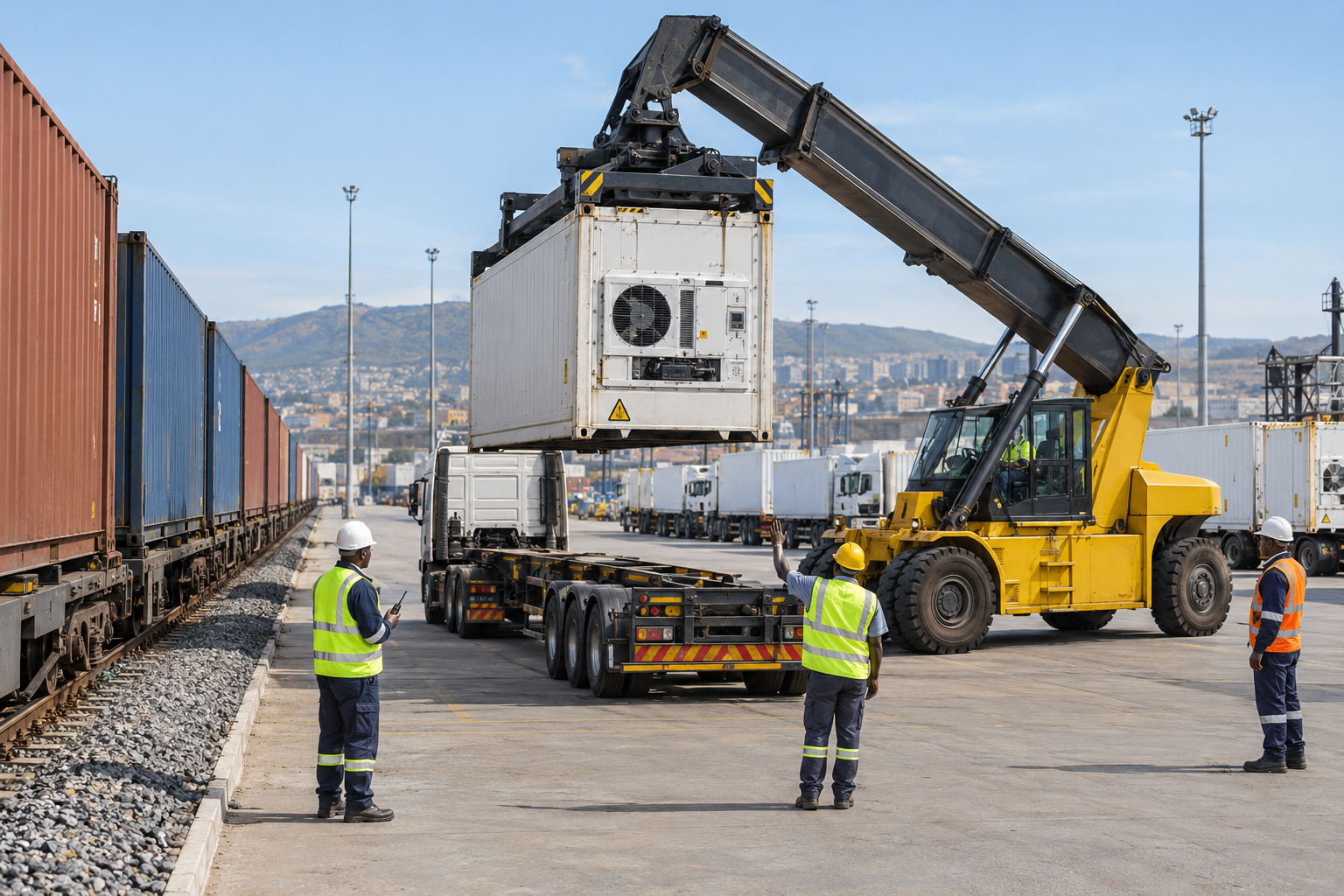 Rail may carry freight over long distances, but trucks, terminals and coordinated handovers complete the journey.
An audience member captured the cargo owner’s concern well: A direct truck journey offers a single movement and a relatively clear chain of custody. An intermodal journey may involve a truck, an inland terminal, a train, another terminal and a second truck.
Every additional handover creates another point at which time, cost or accountability can be lost. For refrigerated freight, that list grows. Is there reefer power at the terminal? How long will a container stand between modes? Is temperature being monitored? Who takes responsibility during transfer? What happens when the incoming truck misses the train slot, or the train reaches a terminal before onward capacity is ready?
These questions explain why modal shift cannot be driven by infrastructure capacity alone. Cargo owners have to trust the journey. That puts inland ports, terminal design, schedules, security, power supply and clear operating responsibility at the centre of the rail discussion. The opportunity is significant. So is the work required between the modes.
The weakest interface can undo an excellent piece of infrastructure
Harris widened the discussion from individual freight decisions to the way corridors are governed. Africa has roads, railways, ports and terminals of varying quality. It also has numerous transport agreements, protocols and corridor initiatives.
The difficulty is making them operate as a connected route. A high-performing terminal can still feed into a congested road. A reliable rail section can lose time at a poorly functioning interchange. An efficient warehouse inherits the constraints of the network around it.
Harris referred to corridor-management structures that have attempted to bridge these divides, including the former Maputo Corridor Logistics Initiative and the Northern Corridor Transit and Transport Coordination Authority in East Africa. Their significance lies in bringing government agencies and private-sector operators into the same conversation about standards, bottlenecks and corridor performance. That institutional layer can sound distant from day-to-day cold-chain operations. It is anything but.
A refrigerated facility may meet every required temperature standard inside its walls. Product can still lose value if it then sits for hours at a border, waits for a terminal slot or reaches a point in the chain without adequate refrigeration capacity. Cold chain is continuous by definition, in that its performance depends on the quality of the handovers.
Africa may understand its transport problems better than its execution record suggests
The frustration around implementation surfaced repeatedly. Harris pointed to policies, protocols and regional initiatives that have existed for years. He questioned why so much work had produced limited movement in some areas.
Lord was more pointed: “You’ve got plans on plans on plans.”
That line drew attention to a familiar infrastructure dilemma. Planning matters. So do sound engineering, procurement, feasibility work, regulatory oversight and public accountability.
Yet an operating system also learns by operating. Routes are improved after they are run. Warehouse layouts change when bottlenecks become visible. Scheduling improves when assumptions meet actual cargo volumes.
Lord’s argument was to begin delivering, learn from the mistakes and adjust as the work proceeds. There is a lesson here for corridor development. Perfection on paper has limited value if execution keeps moving into the future. Smaller implementable interventions, clear measurements and continuous correction may achieve more than repeatedly redesigning a system that never reaches operating scale.
Congestion costs more than the number on a transport invoice
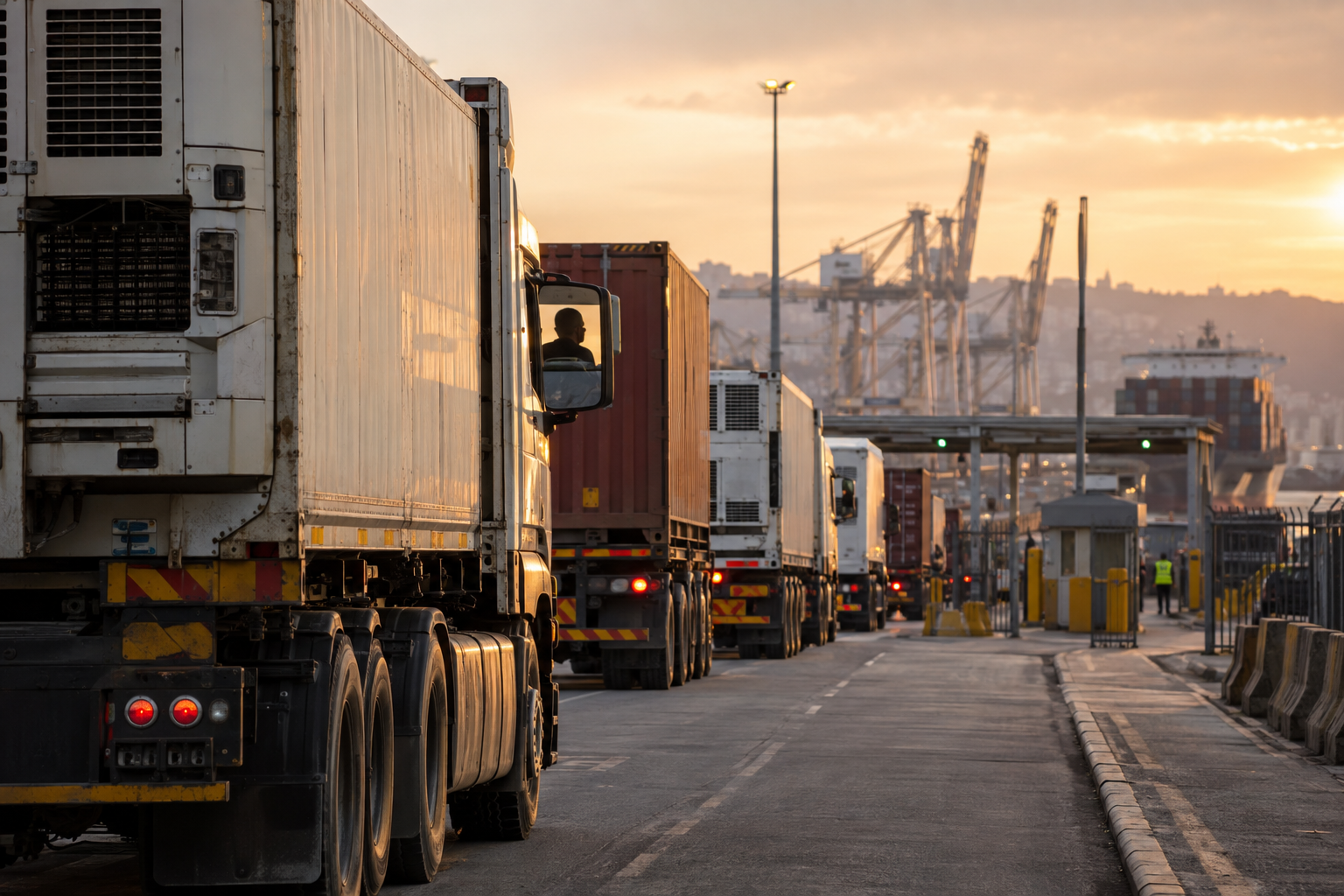 For temperature-sensitive freight, time spent waiting can increase costs, reduce shelf life and place product quality at risk.
One of the more commercially important parts of the discussion concerned costs that disappear inside ordinary ways of doing business.
A road journey may appear cheaper than an intermodal option when the rates are compared directly. Then the truck spends hours waiting outside a port. That time has a cost. So does the fuel consumed while waiting. The vehicle that cannot make another trip. The driver hours. The shipping delay. The inventory tied up in transit.
Lord spoke about work aimed at understanding how congestion costs are distributed between shipping lines, municipalities, terminal operators, truckers and rail operators. That exercise matters because visible freight rates tell only part of the story. Some costs have been absorbed into the way the system operates for so long that they begin to look normal.
For food supply chains, the consequences eventually reach consumers. Transport sits inside the cost of what arrives on a supermarket shelf. For perishable food, inefficient movement can also shorten the remaining commercial life of the product. The conversation around logistics efficiency therefore has a direct connection to food affordability and food loss.
Every unnecessary hour has somewhere to land.
Today’s freight industry is still negotiating with yesterday’s infrastructure
Harris brought a long historical perspective to South Africa’s rail system. Parts of the network date back generations. Investment patterns, design decisions and physical limitations made many decades ago continue to shape what contemporary operators can do.
An audience question raised the ability of sections of the rail network to accommodate modern container configurations and the practical constraints created by terrain, tunnels and clearances.
Although it was not clear which specific routes can accommodate particular configurations, so that technical conclusion should be left to the relevant rail authorities and engineers. The larger point, however, was: freight capacity depends on considerably more than kilometres of track. Tunnel height matters. Port access matters. Terminal configuration matters. Rail gauge matters. Loading capacity matters.
Cold-chain logistics adds power availability, reefer plugs, monitoring systems and backup supply to that list. Some constraints can be improved through better operating practices. Others are built into concrete, track and geometry. Those require capital and choices about where that capital will produce the greatest improvement in flow.
Corruption also belongs in the logistics conversation
The discussion became particularly direct when an audience member raised corruption as a barrier to execution. Lord resisted placing all responsibility on government. “We like to push the public sector and say, ‘Look at the backhands getting accepted.’ Sure. Who’s paying them?”
It was a useful intervention because supply chains depend on predictability. Companies need to know how long approvals take, what access costs, which rules apply and whether competitors are operating under those same rules. Corruption distorts all of those assumptions.
It raises costs, weakens trust and makes investment decisions harder. It also creates an operating environment in which businesses following established processes can find themselves disadvantaged by those prepared to circumvent them. Lord’s point was uncomfortable by design. Business cannot demand cleaner institutions while treating its own participation in corrupt transactions as someone else’s problem. Reliable logistics requires reliable rules.
The next gains may come from what happens between the assets
There was no single engineering solution offered during the GCCA discussion. That may be one of its strengths.
Africa will continue to need investment in rail, ports, roads, inland terminals and cold-chain capacity. Harris and Lord’s discussion also exposed the value sitting between those assets: better interfaces, clearer operating rules, stronger corridor institutions, more accurate costing and a willingness to execute.
For the food system, this has particular relevance. A cold room achieves little if the next part of the journey fails. A warehouse creates greater value when transport and receiving capacity are coordinated around it. Food that is safe and useful today can lose both commercial and social value while waiting for a system to move it.
Food rescue encounters the same reality. Recovering surplus requires trucks, warehousing, temperature control, route planning, data and trusted CBOs capable of completing the last mile. Movement determines whether value is preserved.
The question worth carrying beyond GCCA Africa 2026 is therefore a practical one: Before Africa builds its next piece of logistics infrastructure, how much more could be unlocked by making the infrastructure already in place work better together?
Your support strengthens the logistics, warehousing and community networks that help rescued food reach the people who need it.