At a Johannesburg primary school serving up to 700 children a day, one truth becomes impossible to ignore:
School feeding is not a side issue. It is part of what makes learning possible.
At Akani Primary School in Deep Street, Johannesburg, the day’s meal was simple: rice, tin fish stew, and Easter eggs, but what happened around that meal told a much bigger story. SRC Members from the JHB Culinary & Pastry School also stepped in to help prepare the food. Staff supported the process. Children queued with excitement. By the time the team left, the pots were nearly empty, and some learners were already returning for extra rice.
This was not just a school visit. It was a glimpse into the daily pressure schools carry, and the quiet dignity that reliable food access can restore. When a school feeds 700 children, food is not a side issue. Akani Primary serves between 650 and 700 children every day. That matters, because when a school is feeding that many learners, food is no longer separate from education. It becomes part of the foundation that holds the school day together. A hungry child cannot concentrate properly. A school community under constant pressure to feed hundreds of children is doing far more than teaching. It is absorbing the weight of a wider social crisis.
That is why school feeding deserves to be taken seriously, not as charity, but as essential social infrastructure.
Revealing Impact
What stood out at Akani Primary was not only the meal itself. It was the atmosphere around it. There was participation. There was appreciation. There was visible excitement.
The SRC members did not stand outside the experience. They helped make it happen. The principal and staff welcomed the support and expressed their appreciation. The children were delighted, not only by the Easter eggs, but by the simple fact of being fed well and seen. That matters because dignity is not only about what is received. It is also about how it is received, and who gets to be part of the process. In communities facing constant pressure, these moments are not small. They shift the emotional temperature of a place. They create a little more ease, a little more stability, and a little more room for learning.
South Africa does not have a food shortage. It has a food system challenge. This is where the story becomes bigger than one school – across South Africa, millions of people face hunger while enormous volumes of good food go to waste each year. SA Harvest exists to help close that gap by moving surplus food to where it is needed most, with urgency, discipline, and care.
That is the real challenge: not supply alone, but access.
Schools, community organisations, and families are doing everything they can with limited resources. At the same time, edible surplus exists across the broader food economy. The question is whether there is a system strong enough to rescue that food and redirect it quickly, safely, and consistently. That is the work SA Harvest is building every day: turning surplus into access, and access into impact and why school feeding is really about dignity and learning.
School feeding is often spoken about as though it sits on the margins of education. It does not. We firmly advocate for the fact that it its at the centre. When children are nourished, they are better able to focus, participate, and remain engaged in the school day. When schools have some support in meeting the basic needs of learners, staff can work with greater stability. When food arrives reliably, it helps restore a sense of order and care in places that are often being asked to carry too much. This is why a meal should never be reduced to a statistic alone.
Yes, numbers matter. Scale matters. Efficiency matters. But so does the child who comes back for a second helping because there is finally enough. So does the teacher who sees learners settle more easily into the day. So does the principal who says: please come back. Those are not soft outcomes. They are signs that food changes what becomes possible.
More than a one-day intervention
The lesson from Agani Primary is clear. A meal matters in the moment. But the bigger goal is reliability.
What South Africa needs is not only occasional generosity. It needs stronger systems that make dignified food access more consistent for the schools and communities carrying the greatest burden. That means better recovery of surplus food. Better logistics. Better community partnerships. Better coordination between those with excess and those with need. It means building a food system that works better for people. And it means recognising that feeding children at school is not an act of kindness added onto education. It is one of the conditions that helps education happen at all.
The bigger question
If one school is feeding up to 700 children a day, how many others are carrying the same weight quietly, with too little support? That is the real question this story leaves behind.
And it is why food rescue matters. Not because it makes for a good headline, but because it helps build the bridge between surplus and survival, between hunger and learning, between pressure and possibility.
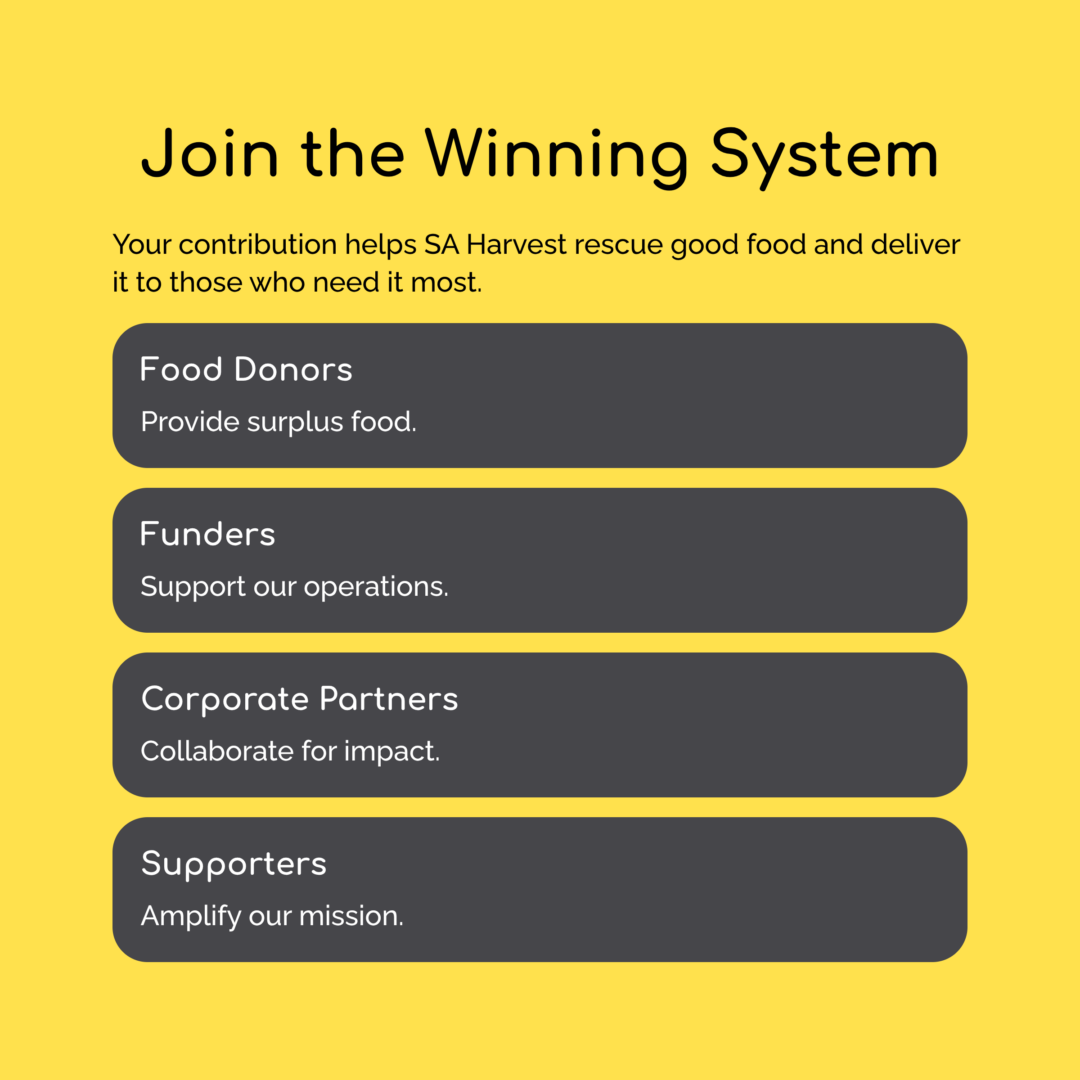
If you have access to surplus to contribute, please complete this form (https://wkf.ms/4lKysfG), or reach out to our team telephonically to explore alternative ways you can become part of the winning system.