On Global Recycling Day 2026, the world is asked to rethink waste as a resource. This year’s theme, “Don’t Think Waste – Think Opportunity,” highlights the circular economy – keeping resources in use, reducing waste, and regenerating value.
In South Africa, where 10 million tons of food are wasted annually, food rescue is one of the most powerful examples of the circular economy in action. Every kilogram of food wasted represents wasted water, energy, and labour. By rescuing food, SA Harvest keeps these resources in circulation, prevents methane emissions, and strengthens communities.
The Problem with Food Waste in South Africa
Food waste is not inert. In landfills, it decomposes without oxygen and produces methane – a greenhouse gas far more potent than CO₂. Although food waste makes up only 24% of municipal solid waste, it is responsible for an estimated 58% of fugitive methane emissions. Because food decays rapidly, it often releases these gases before landfill gas collection systems are even installed.
Beyond emissions, wasted food means wasted inputs: the water used to irrigate crops, the energy used to transport goods, and the labour invested in production. Food rescue addresses all of these losses by keeping food in use rather than letting it rot.
Food Rescue as Climate Action
SA Harvest intercepts surplus food from farmers, manufacturers, and retailers, and redirects it into communities through vetted organisations. This ensures nutrition is delivered where it is needed, while preventing waste and conserving resources.
Through a tech‑enabled reverse logistics network, every item is tracked from collection to delivery. This system is national infrastructure – not charity – designed to solve hunger and reduce environmental harm.
Measured outcomes include:
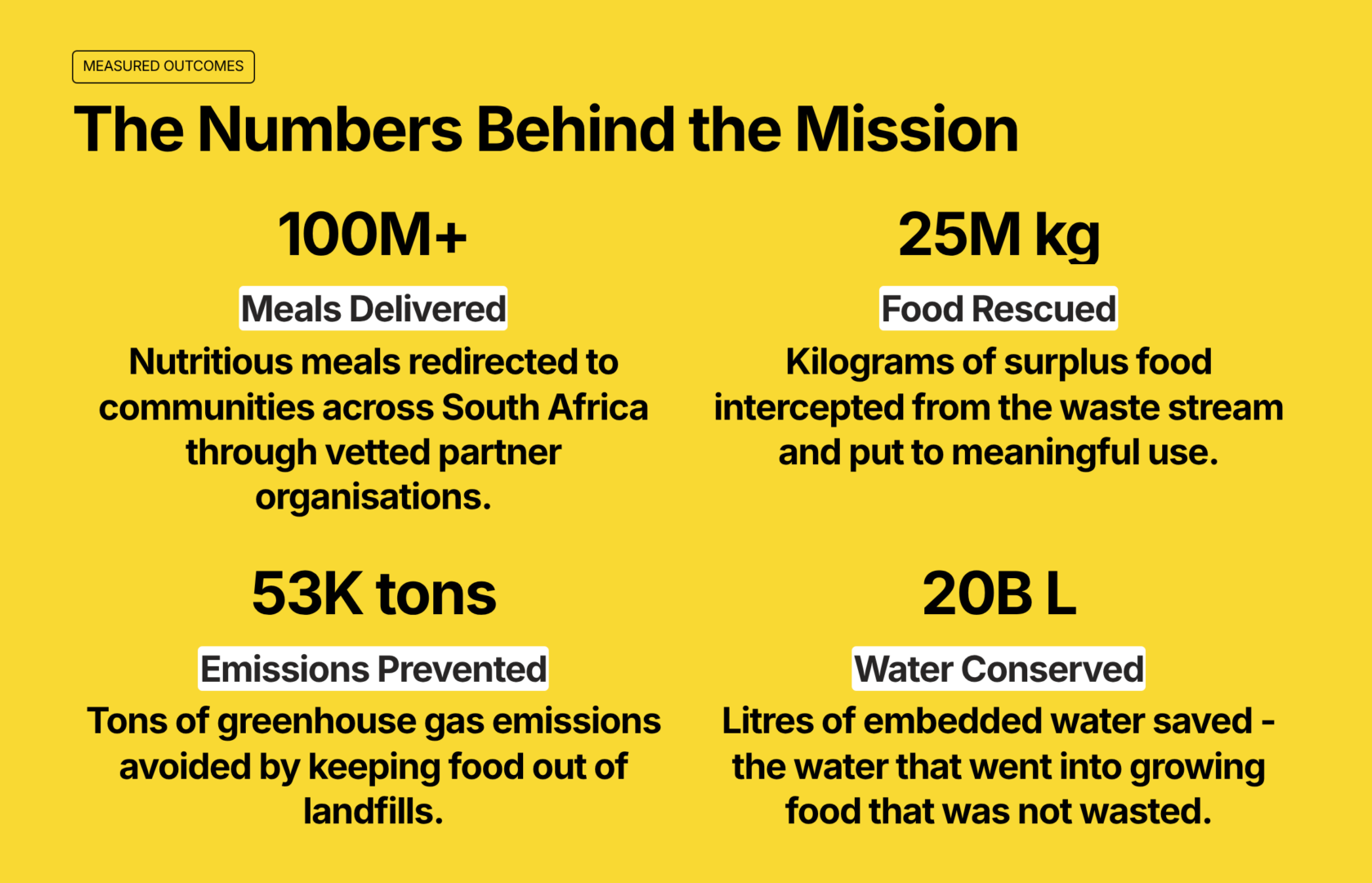
For every tonne of surplus food rescued, an estimated four tonnes of greenhouse gas emissions are saved. Food rescue is one of the most effective tools for meeting climate goals.
Composting: Closing the Loop on Organic Waste
Not all food scraps can be rescued. For those, the answer is composting. South Africa’s National Waste Management Strategy promotes diverting organic waste from landfills through composting.
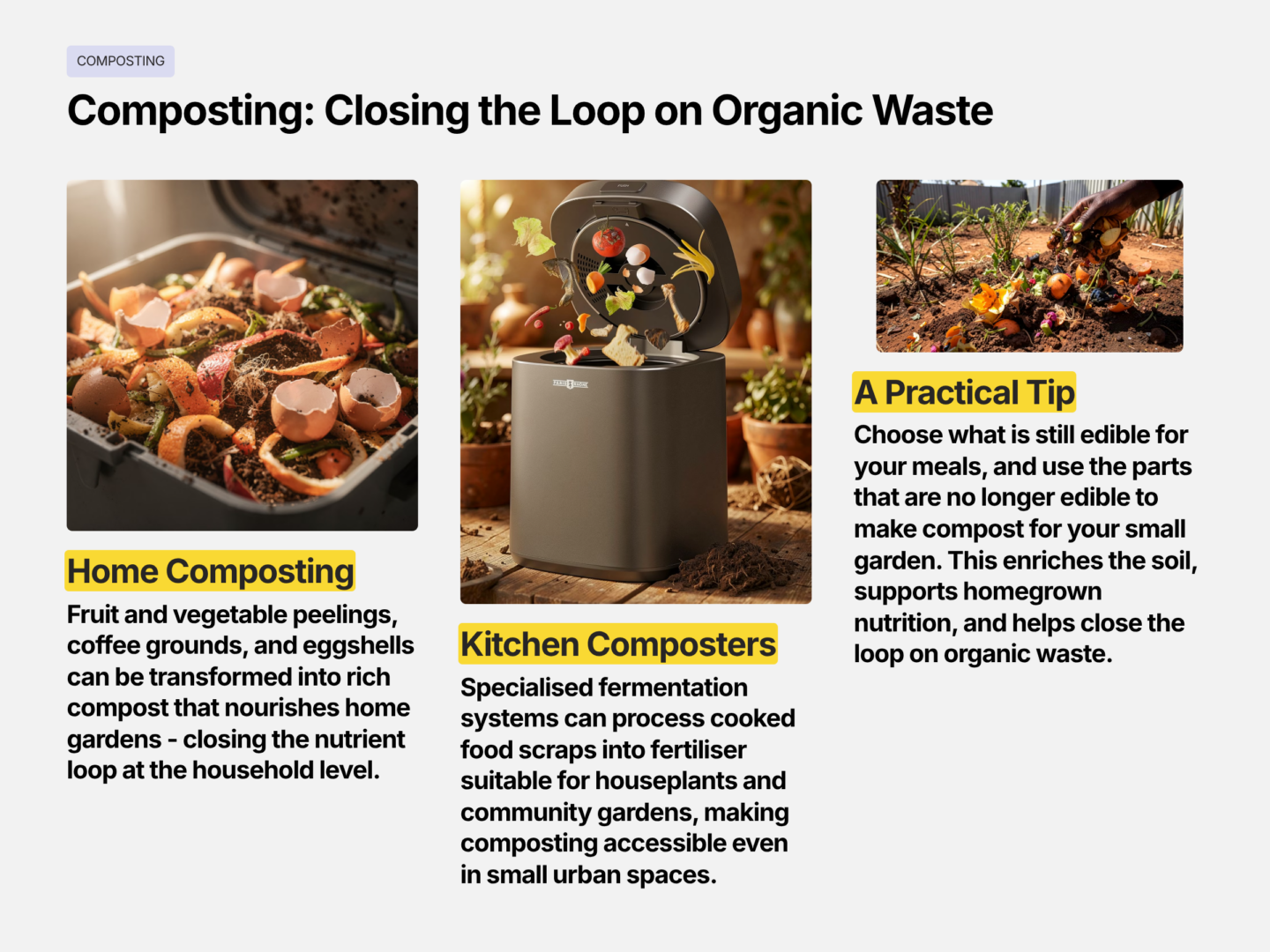
Upcycling Food Waste at Home
Recycling also happens in kitchens, when creativity turns rescued or surplus ingredients into meals. Before you throw food away, think about what it can become.
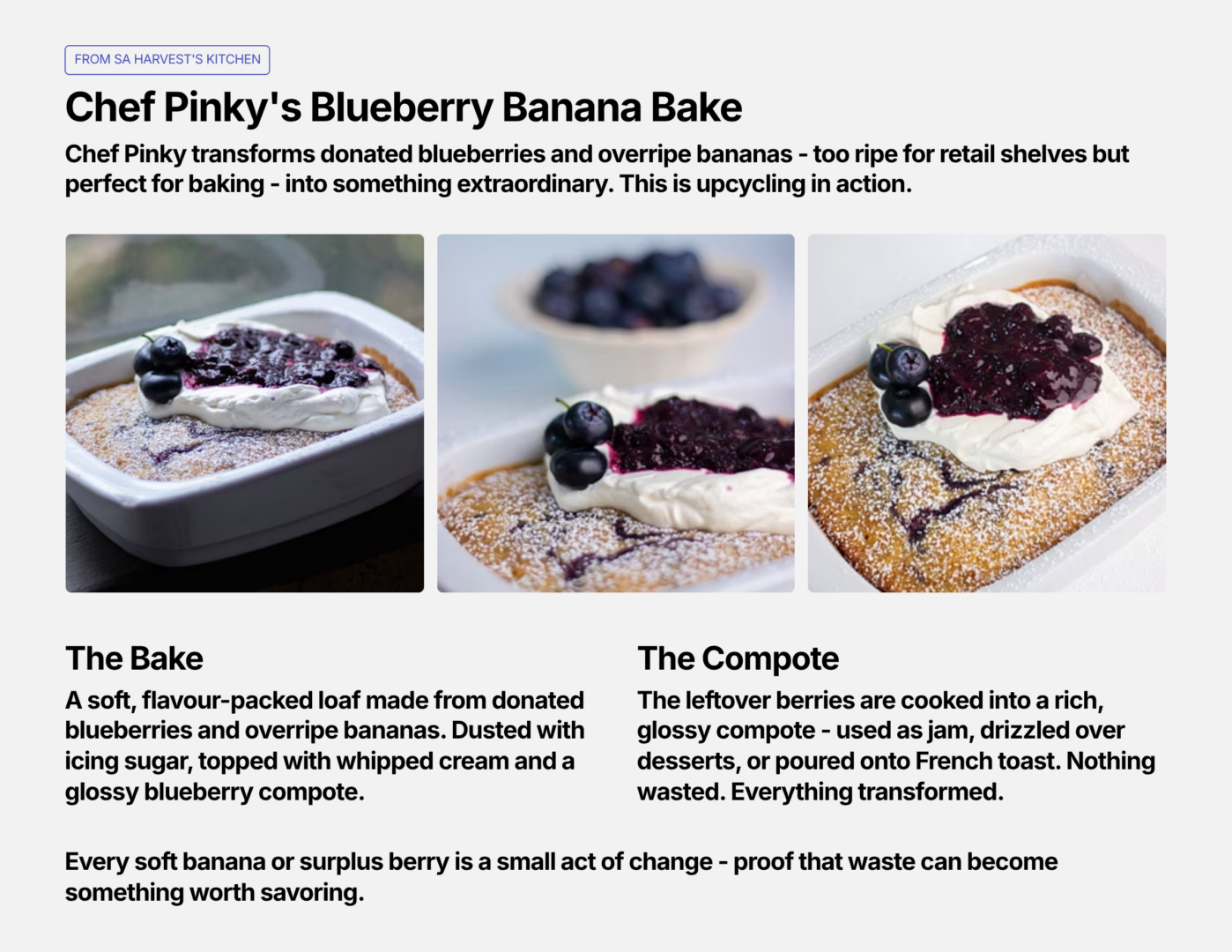
This is upcycling in action – giving ingredients a second chance, reducing waste, and creating more from less. On Global Recycling Day, we celebrate rethinking, rescuing, and repurposing food. Every soft banana or surplus berry is a small act of change, proving that households and organisations alike can turn waste into value.
The Circular Economy in Action
Food rescue is recycling at its best because it keeps resources in use, reduces emissions, and delivers nutrition where it is needed. It is a practical example of the circular economy:
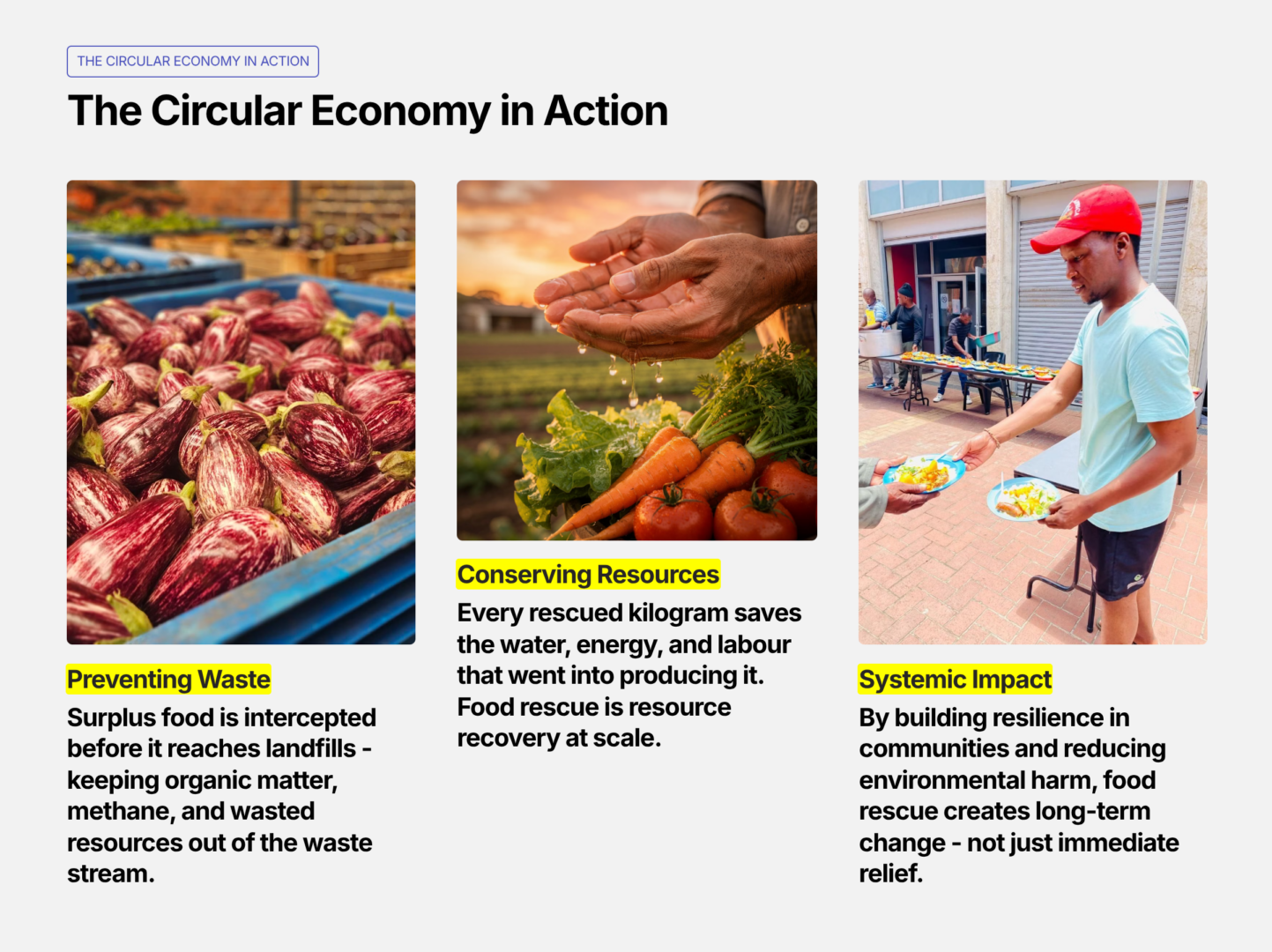
On 18 March 2026, Global Recycling Day reminds us that recycling is not only about paper, glass, and plastic. Food rescue is climate action – a regenerative practice that ensures every act of rescuing and repurposing food brings us closer to a sustainable future.
Take Action: Be Part of the Change
You can help SA Harvest continue building a food system that fights hunger and protects the planet:
Click to Donate Food → Redirect surplus food that would otherwise go to waste.
Click to Donate → Strengthen our logistics network, rescue more food, and deliver more meals.
Together, we can turn waste into opportunity and ensure that no South African goes hungry.