At the Road Freight Association Convention 2026, Simphiwe Letlojane, FASSA, CERA, Head of Strategy Investments at Absa Group, offered a sharp reminder: logistics is never just logistics.
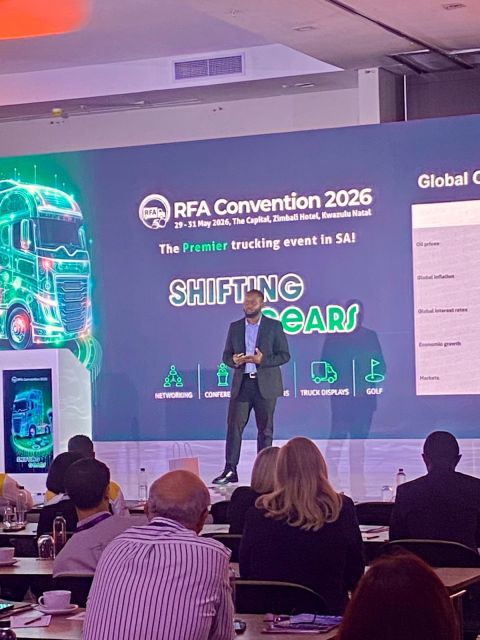 Simphiwe Letlojane, FASSA, CERA – Head of Security Investments: Absa Group in action at RFA Convention 2026!
A conflict elsewhere in the world can shift oil prices. Oil prices can shift diesel costs. Diesel costs can shift the price of transport. And transport costs can affect whether essential goods reach people affordably, reliably and on time.
For the road freight sector, this is an operating reality.
For SA Harvest, it is also a food access reality.
Because food rescue does not happen in theory. It happens on the road.
Food rescue begins before food reaches a plate
When people think about hunger, they often think about the final moment: a meal being served.
But long before that meal reaches a plate, something else has to work.
Logistics is part of food security
That is why the RFA Convention matters to SA Harvest.
The road freight sector keeps South Africa moving. It carries the goods, food, medicines, materials and products that make daily life possible. When that system is under pressure, the effects are felt far beyond transport companies and balance sheets.
Food access is one of those effects.
At events of this nature, Absa brings the economic lens that helps the sector understand the forces shaping movement: fuel volatility, inflation, interest rates, infrastructure spend, investor confidence and the cost of doing business.
SA Harvest works inside the practical consequence of that system.
We see what happens when movement succeeds.
We also see what happens when it does not.
When a truck cannot run, surplus food does not move. When surplus food does not move, it does not nourish. And when good food is wasted while people go hungry, the failure is not only moral. It is logistical, economic and infrastructural.
Food rescue is infrastructure
SA Harvest continues to make this point because it matters:
Food rescue is infrastructure.
It is not simply an act of kindness after the economy has done its work. It is part of how a better economy should work.
The same systems that move goods through South Africa can also move dignity, nutrition and resilience into communities. The same warehouses, routes, vehicles, drivers, cold rooms, data systems and partnerships that support commerce can also help repair food access.
This is where the ecosystem becomes powerful.
The freight sector understands movement. Financial institutions understand risk, investment and scale. Food donors understand surplus and value protection. Community-based organisations understand the last mile. SA Harvest connects these parts into a working system.
A national food system needs national coordination
The opportunity in front of South Africa is not another isolated campaign. It is not charity framed as a short-term response. It is not pity.
A serious national food system needs serious national coordination.
It needs the transport sector, the finance sector, the food sector, funders, government and community infrastructure to see themselves as part of the same solution.
Because a meal does not begin on a plate.
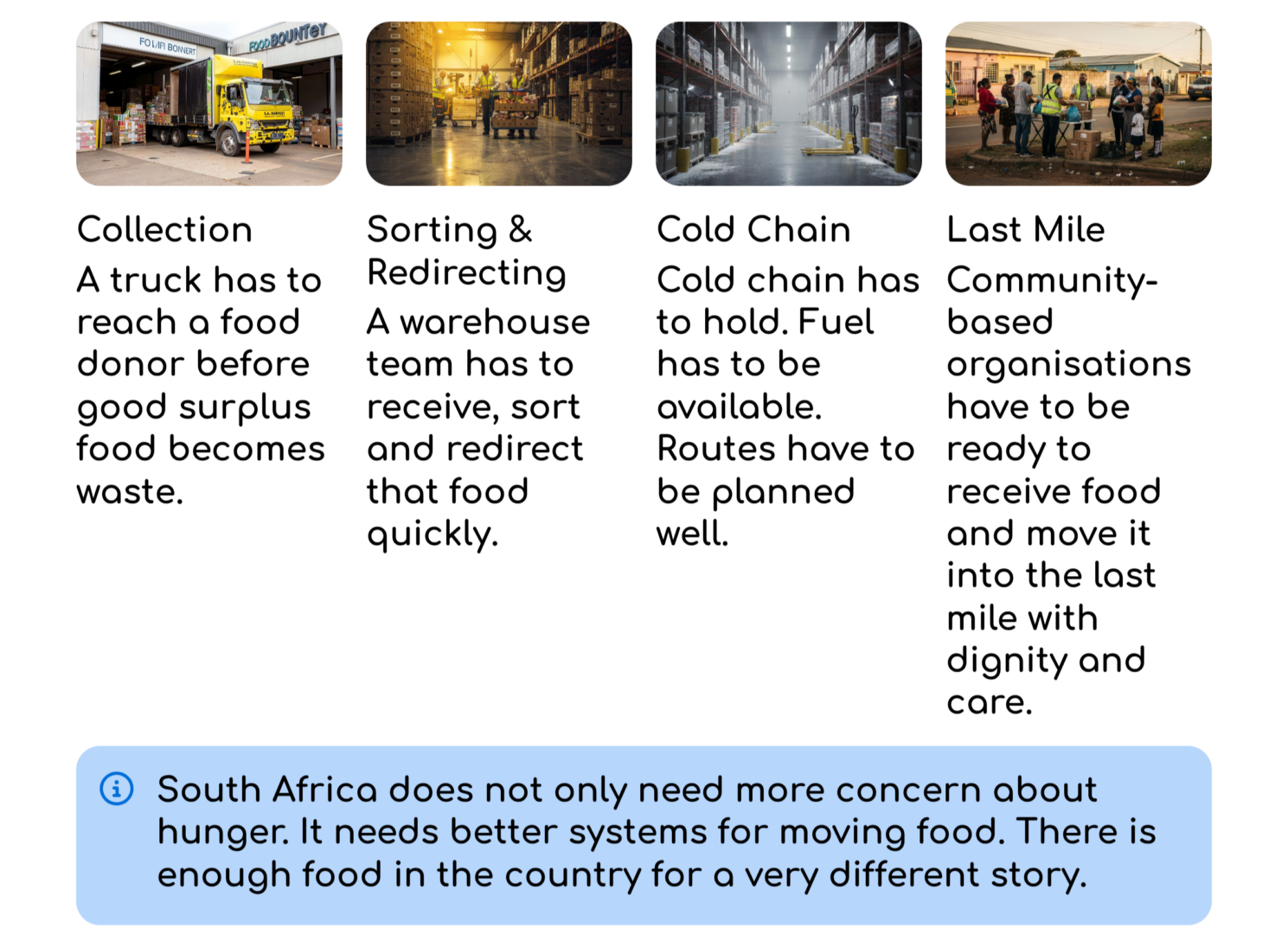
It begins with a system that chose not to waste what could still nourish. It begins with a donor who made surplus available. It begins with a warehouse that had capacity. It begins with cold chain that held. It begins with route planning, fuel, data, drivers and community partners.
And sometimes, it begins with a truck on the road.
When food moves better, people live better
SA Harvest thanks Simphiwe Letlojane for helping frame the economic realities shaping transport, and the Road Freight Association for creating the space where these conversations can move beyond industry insight into national impact.
Because when logistics works better, South Africa works better.
And when food moves better, people live better.
Click here to learn more about SA Harvest