South Africa wastes enough edible food each year to expose one of the clearest failures in our food system.
Millions of tonnes of food that could nourish people never reach a plate. At the same time, millions of South Africans live with food insecurity. This is not only a hunger story. It is a systems story.
Food rescue sits at the point where those two realities meet. Safe surplus food only becomes impact when it can be identified, collected, sorted, stored, transported and delivered through trusted community-based organisations that know the people they serve. In other words, food rescue is not just goodwill. It is logistics, food safety, cold chain, warehousing, route planning, data, donor confidence and last-mile community infrastructure working together.
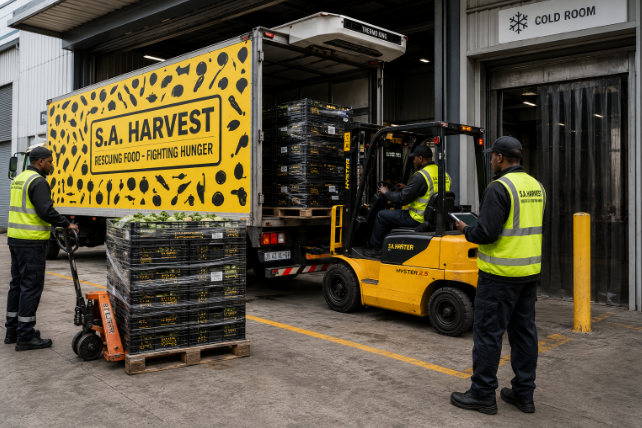 Maintaining the cold chain helps ensure rescued food reaches communities safely.
That is why Draft SANS 2088: Food Donation Management matters. SA Harvest recently submitted comments on the draft standard as part of the public consultation process. The draft has the potential to strengthen how surplus food moves safely and responsibly from farms, manufacturers, retailers and other food system actors to the community kitchens and CBOs supporting people facing food insecurity.
Why food rescue matters in South Africa
South Africa does not have a simple food shortage problem. It has a food access problem.
There is food in the system. The challenge is moving it quickly, safely and fairly to where it is needed most. Food rescue organisations help bridge that gap by recovering safe, edible surplus food before it becomes waste and redistributing it through community-based organisations. When this works well, food that may otherwise have gone to landfill becomes nourishment, relief and dignity.
For a community kitchen, an early childhood development centre or a local organisation supporting households under pressure, rescued food is not an abstract idea. It can mean a meal served, a queue shortened, a child better able to learn, or a family with one less impossible choice to make that day.
It is also one of the most practical forms of waste reduction. Food rescue reduces pressure on landfill, protects the value already invested in producing food, and helps build a more efficient national food system.
What SA Harvest’s submission calls for
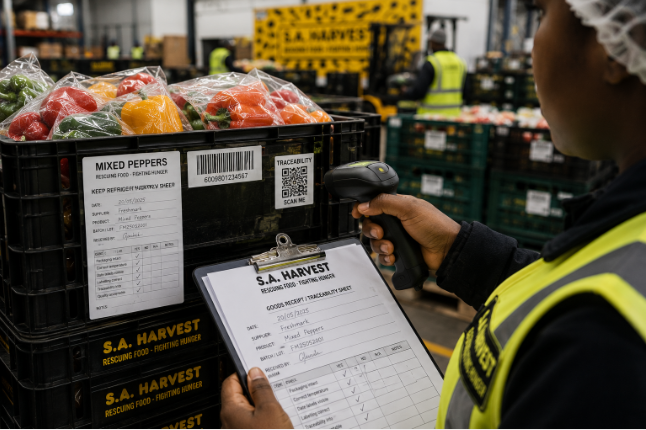 Traceability and clear food safety processes help build confidence across the donation chain.
SA Harvest supports the development of a national best-practice standard for safe food donation and redistribution. A clear, practical framework can help donors act with confidence and help redistribution organisations and CBOs operate safely at scale.
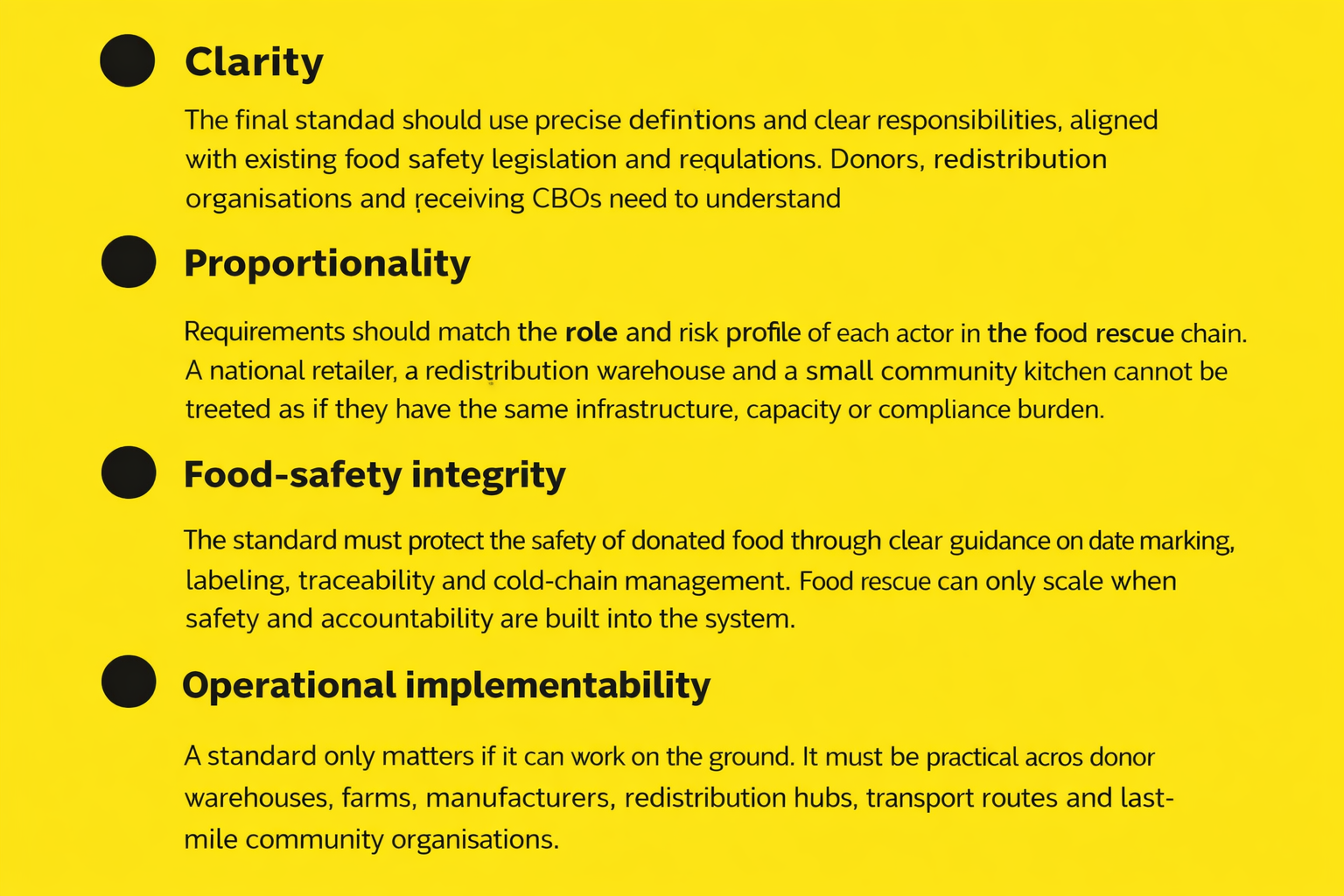
Our submission focused on four areas that are essential for the standard to work in real South African conditions:
A turning point for food rescue
SANS 2088 does not sit outside South Africa’s existing food safety framework. Its value lies in translating food safety principles into a practical guide for donation and redistribution.
That matters because uncertainty slows action. When donors are unsure about date marking, labelling, liability, traceability or what can responsibly be donated, safe food may be wasted instead of redirected. When CBOs face requirements that are too complex or unrealistic, the very organisations closest to communities risk being excluded from the system.
A strong final standard can help change that.
It can give food donors greater confidence to release surplus food responsibly. It can support redistribution organisations with clearer operating rules. It can protect CBOs from being overburdened while still strengthening food safety. And it can help South Africa move more edible food away from landfill and into communities where it is needed.
Standards can unlock confidence
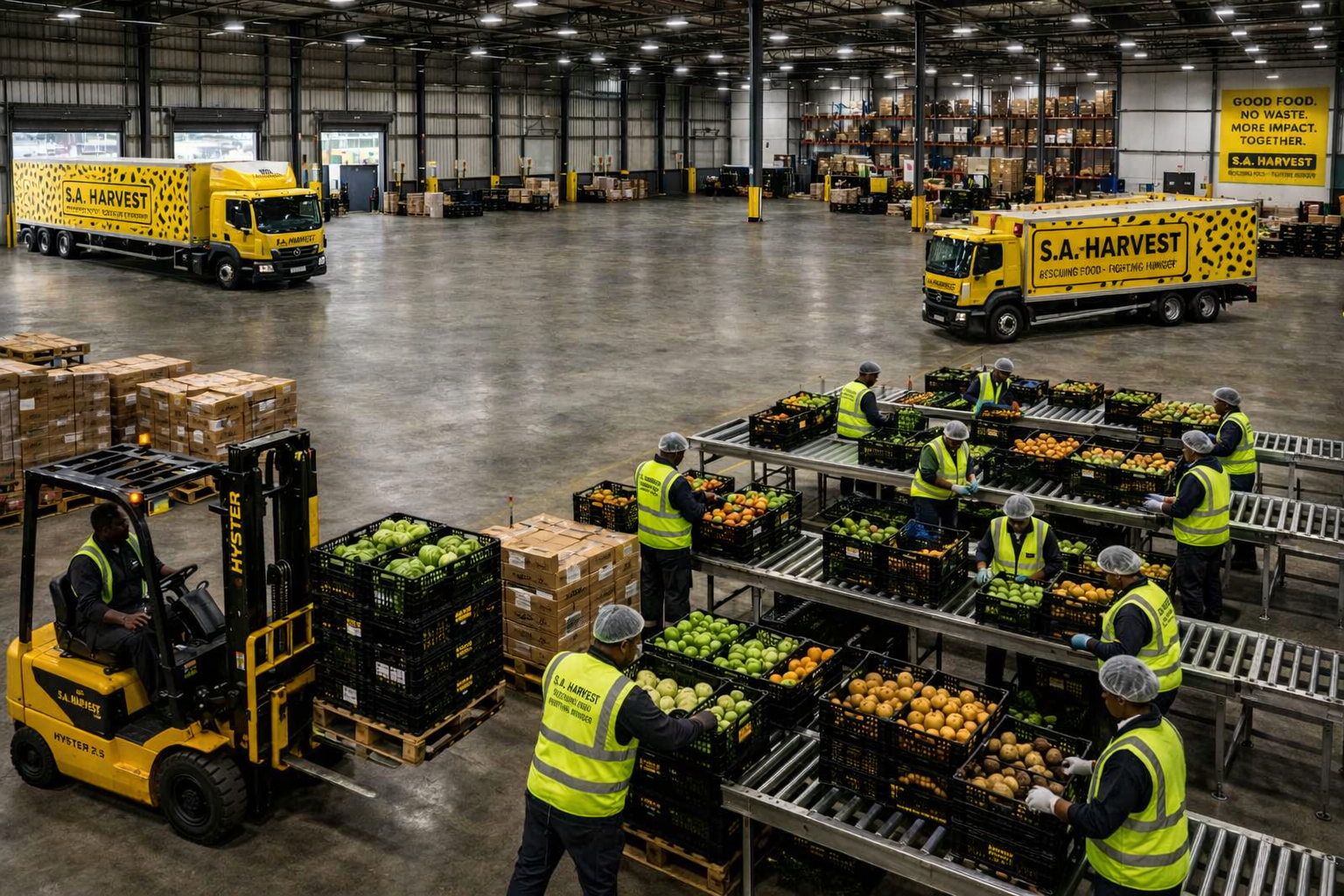 Food rescue succeeds when logistics, food safety and community partnerships work together.
This draft standard is more than paperwork. It is part of the infrastructure South Africa needs if food rescue is to operate safely, consistently and at greater scale.
Food rescue is not simply about moving food from one place to another. It is about building the system that makes that movement possible: the warehouses, cold rooms, vehicles, drivers, food donors, compliance processes, data systems and CBO networks that turn surplus into access.
With the right standard in place, South Africa can unlock more safe surplus food, reduce avoidable waste, support trusted community infrastructure and strengthen food access for people across the country.
Good food should not become waste because the system failed to move it in time.
SANS 2088 is an opportunity to make that system work better.
Further reading: For a deeper look at the draft framework and the voices shaping it, including SA Harvest’s perspective, read Daily Maverick’s article: Beyond ‘best before’ – SABS unveils landmark draft plan to tackle food waste crisis.
Click here to donate surplus food
Click here to support food rescue infrastructure