Most people think oil prices only matter to traders and economists. But in South Africa, they show up somewhere else:
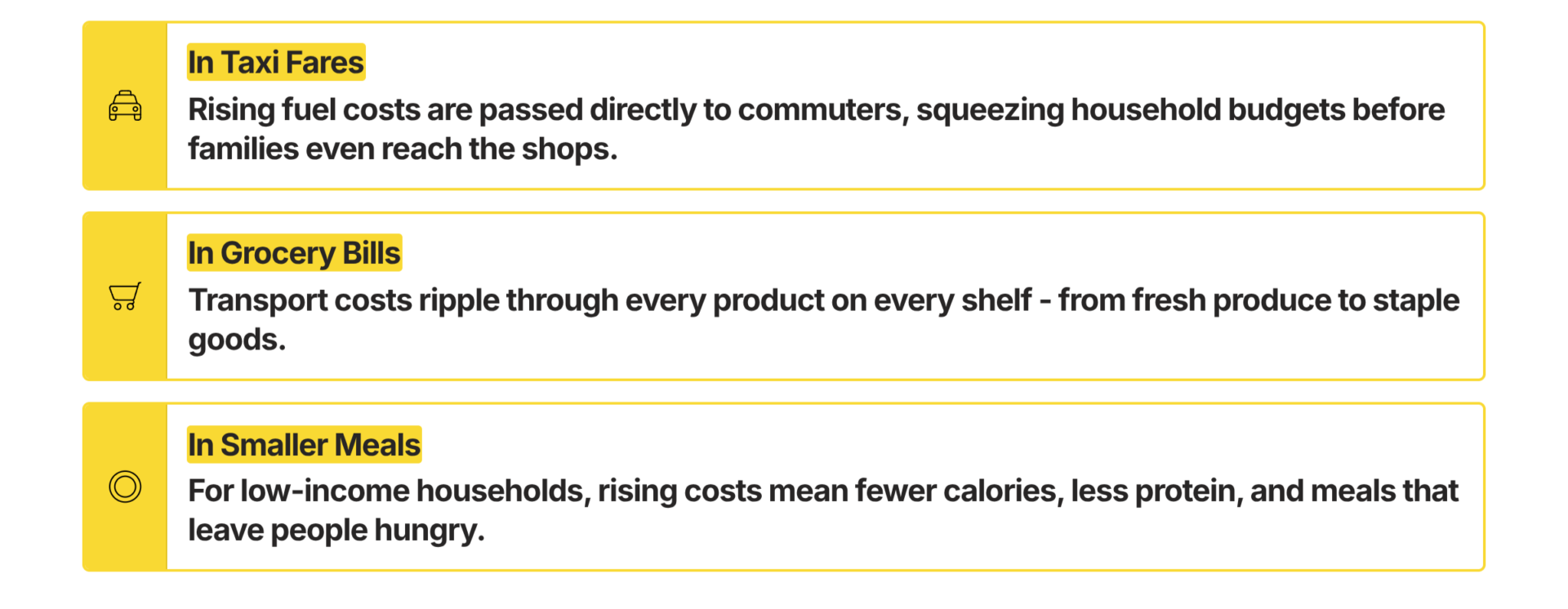
What begins as geopolitical conflict thousands of kilometres away can quietly end as hunger in South African households. Because the pathway from global conflict to local hunger is mechanical. And right now, that mechanism is tightening.
The Global Shock That Reaches Our Dinner Tables
Recent escalation in the Middle East has shaken global energy markets. Oil prices surged as tensions threatened shipping routes through the Strait of Hormuz, one of the world’s most critical energy corridors.
About 20–30% of global oil passes through this narrow channel. When markets panic, oil prices rise. When oil prices rise, fuel becomes more expensive. And in South Africa those costs move through the economy very quickly, because South Africa is a price taker in global energy markets.
We import most of our refined fuel, and our domestic fuel price is directly linked to global markets through the Basic Fuel Price formula. When global oil prices climb, South African fuel prices follow, often within weeks.
The Hidden Chain: Fuel → Food → Hunger
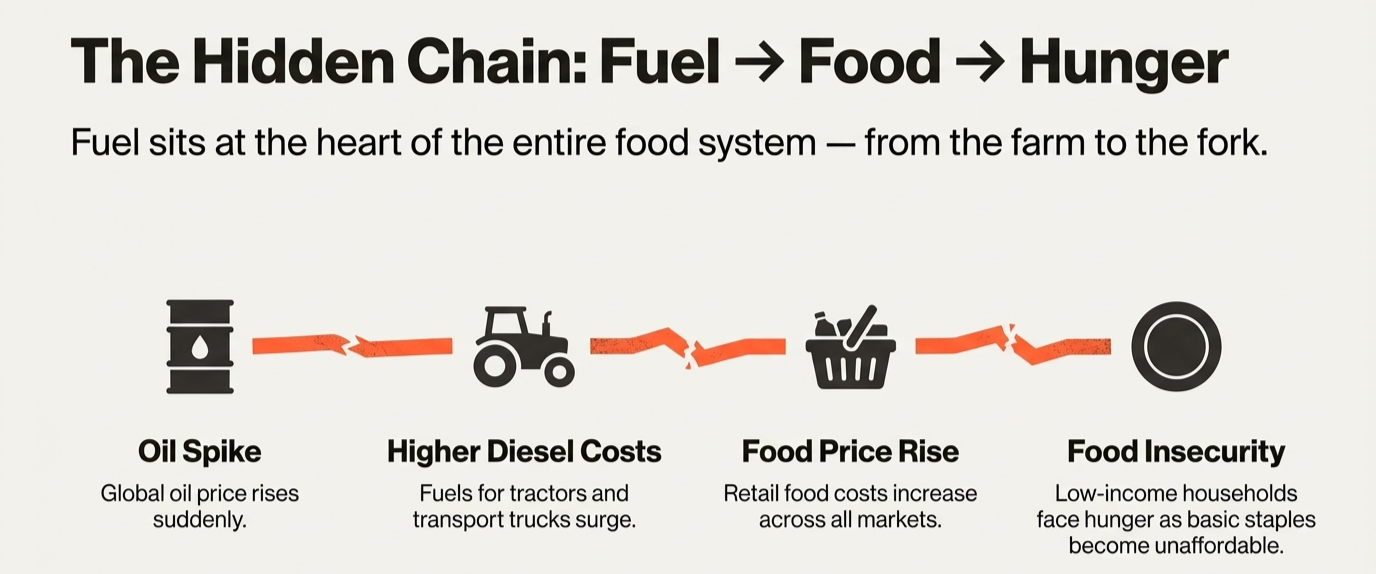
Fuel is not just about transport. It sits at the heart of the entire food system. Diesel powers tractors, irrigation pumps, and trucks that move food from farms to distribution centres and supermarkets.
In South Africa, around 80% of food moves by road freight. So when fuel prices rise, food prices follow fast. For businesses this means thinner margins. For low‑income households it means impossible choices.
Transport to work is non‑negotiable. Electricity is non‑negotiable. Food becomes the only flexible cost. Meals become smaller. Protein disappears from the plate. Parents skip meals so children can eat.
The Quiet Crisis: Childhood Stunting
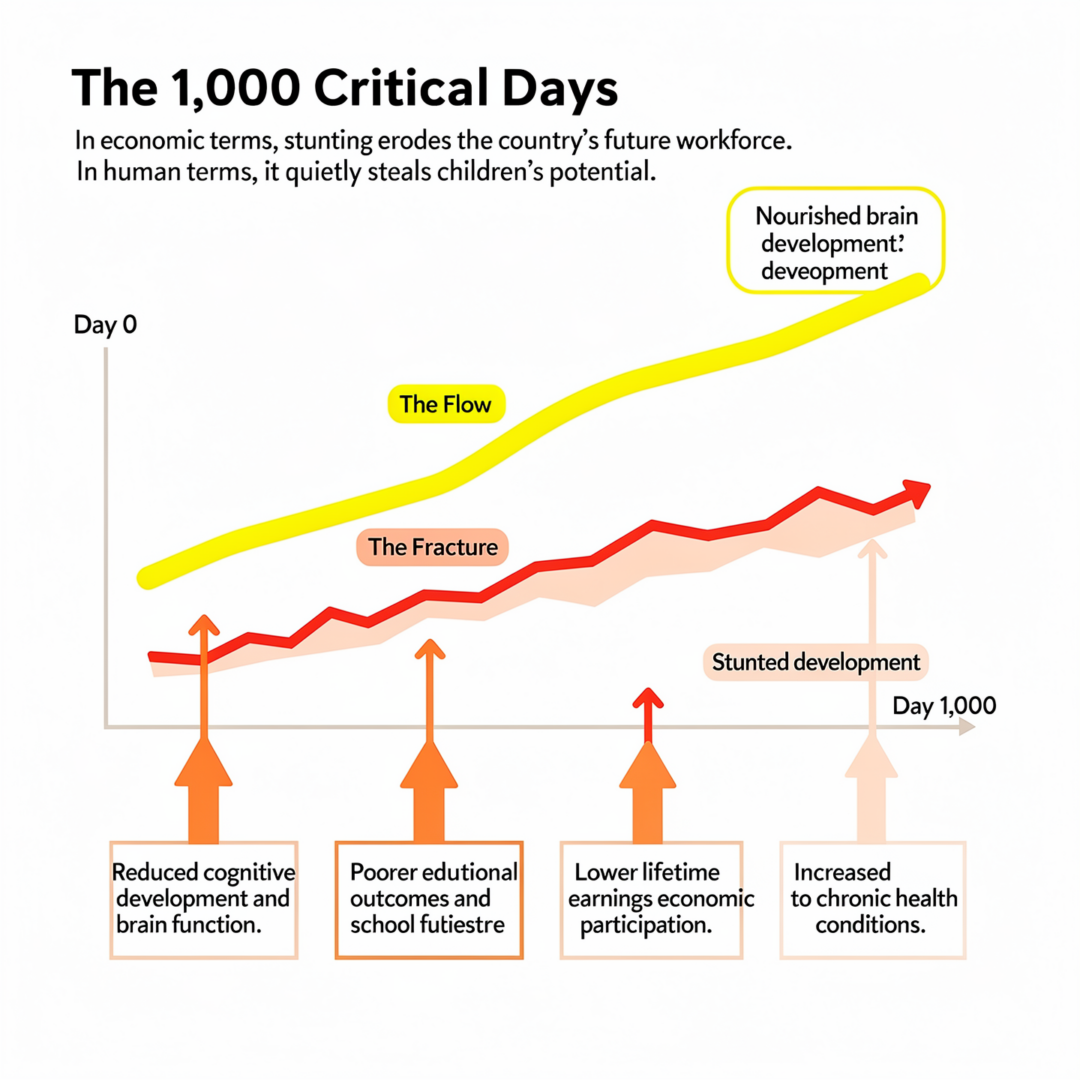
South Africa already faces a devastating statistic: one in four children under five is stunted.
Stunting is not simply about being shorter. It is the result of chronic malnutrition during the first 1,000 days of life, the critical window when a child’s brain develops. When children do not receive adequate nutrition during this time, the consequences last a lifetime:
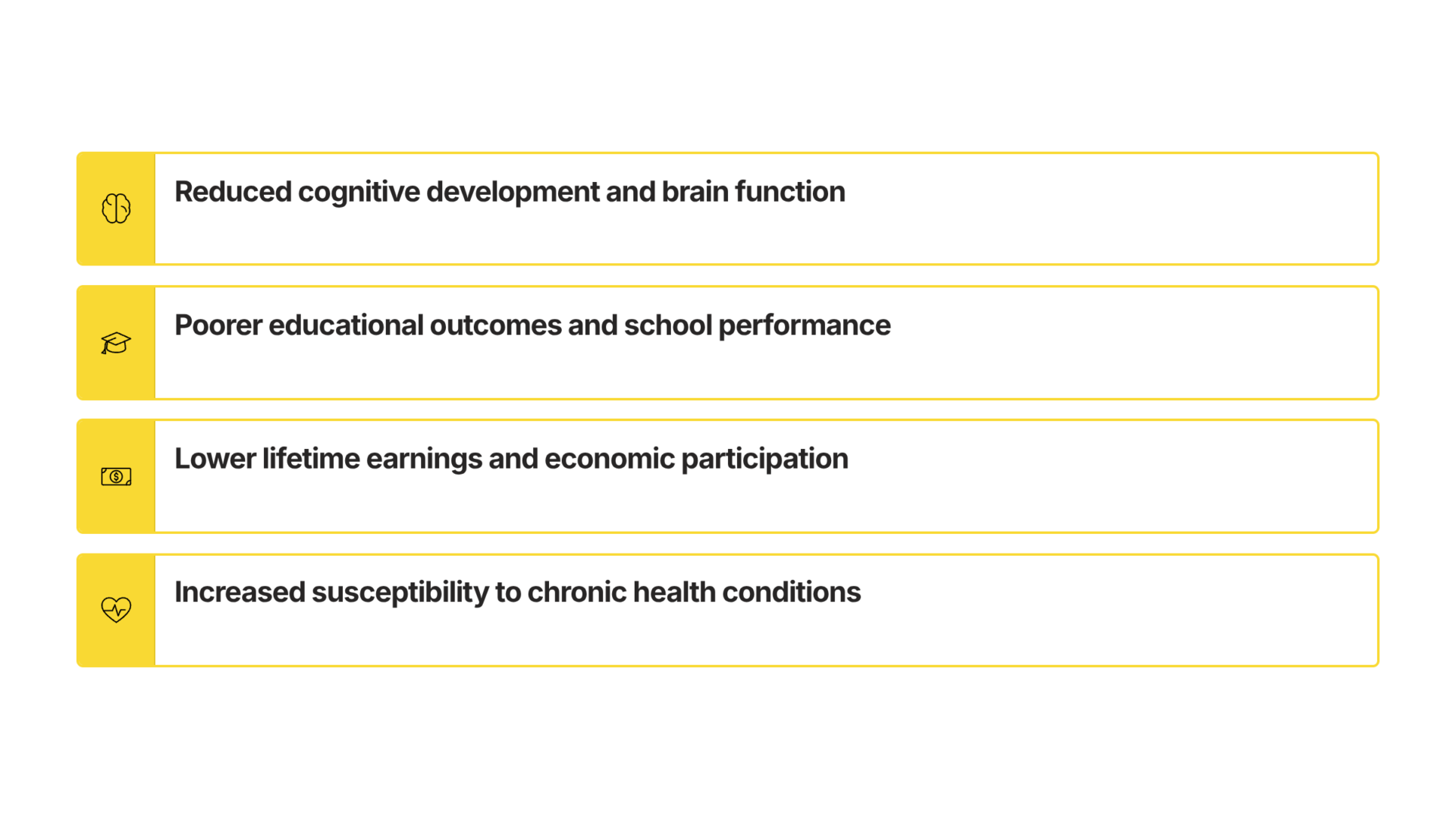
In economic terms, stunting erodes the country’s future workforce. In human terms, it quietly steals children’s potential.
The Paradox: Hunger in a Land of Plenty
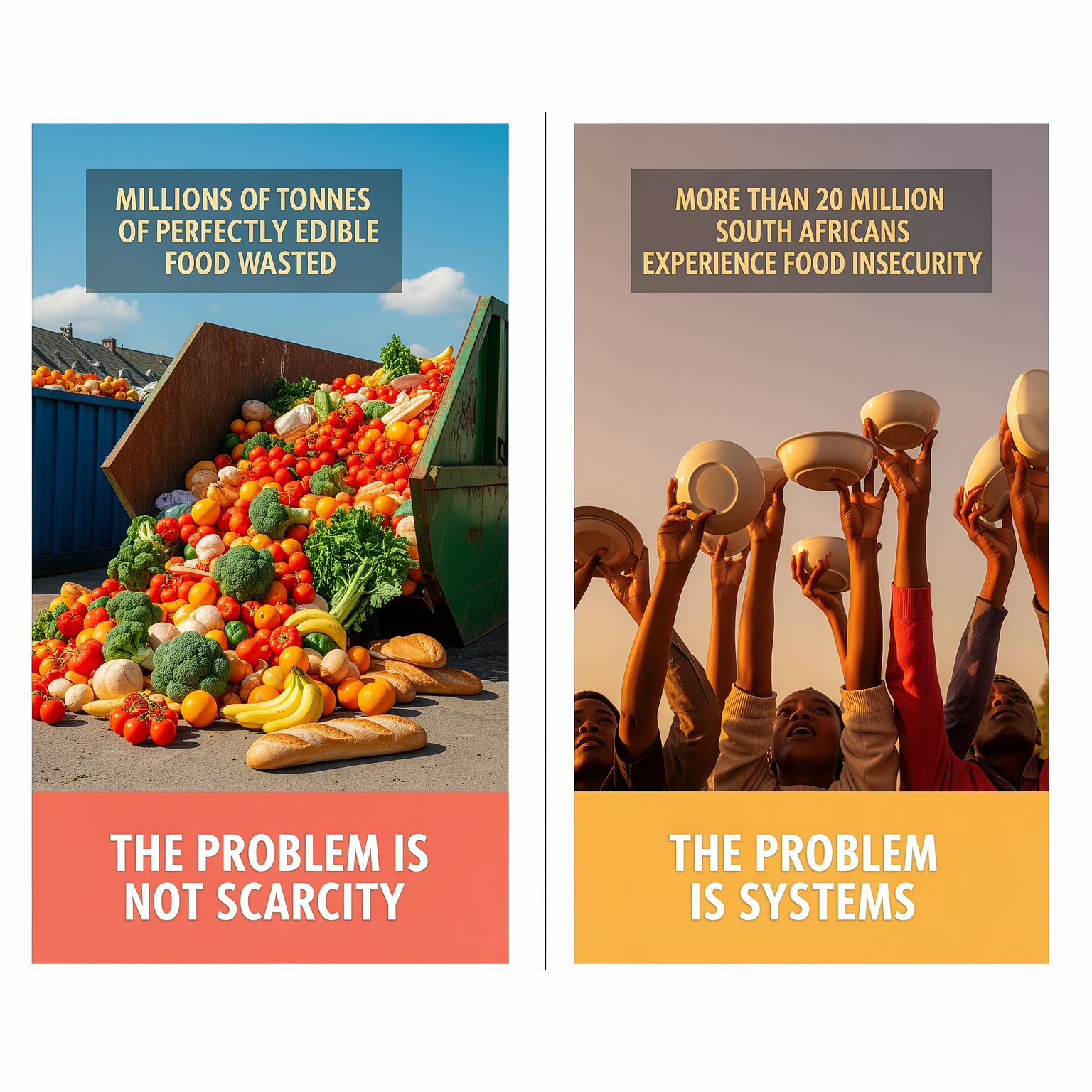
The tragedy is that South Africa does not lack food. Every year millions of tonnes of perfectly edible food are wasted across the agricultural, retail and hospitality sectors. At the same time, more than 20 million South Africans experience food insecurity.
The problem is not scarcity. The problem is systems. Food exists, but it is in the wrong place.
The System That Moves Food
This is where organisations like SA Harvest come in. Over the past few years, we have built one of South Africa’s largest food‑rescue logistics networks, intercepting surplus food before it becomes waste and redirecting it to communities facing hunger.
Today this system rescues tens of millions of kilograms of food every year, distributing it through hundreds of community organisations feeding vulnerable families.
But here is the challenge: as economic pressure grows, demand for food support rises. At the same time, rising fuel costs make it more expensive to rescue and transport that food. Which means the solution cannot rely on NGOs alone.
Food security is often framed as a welfare issue. But it is much bigger than that. Food is the foundation of education, health, workforce productivity and economic participation. Without reliable access to nutritious food, every other social intervention becomes harder.
This is why SA Harvest is building something much bigger than food aid. It is building a national food-system infrastructure that converts surplus into reliable, dignified food access on a large scale.
The Opportunity
Every day, businesses across South Africa generate surplus food – retailers, farmers, food manufacturers, distribution centres, hospitality groups. Most of that food is still perfectly edible.
But without the right logistics systems, it becomes waste. The SA Harvest ecosystem exists to change that. By connecting surplus supply to community demand through logistics, technology and partnerships, businesses can turn what was once waste into measurable social impact.
Solving hunger cannot be done by NGOs alone. It requires an ecosystem. Every organisation that produces, moves, or sells food can become part of the solution. Because the food already exists. The question is whether we build the systems to move it.
The Ask
If you or your organisation is part of South Africa’s food, logistics, retail, or supply chain ecosystem, there is a powerful opportunity to participate.
Companies are joining the SA Harvest ecosystem through:
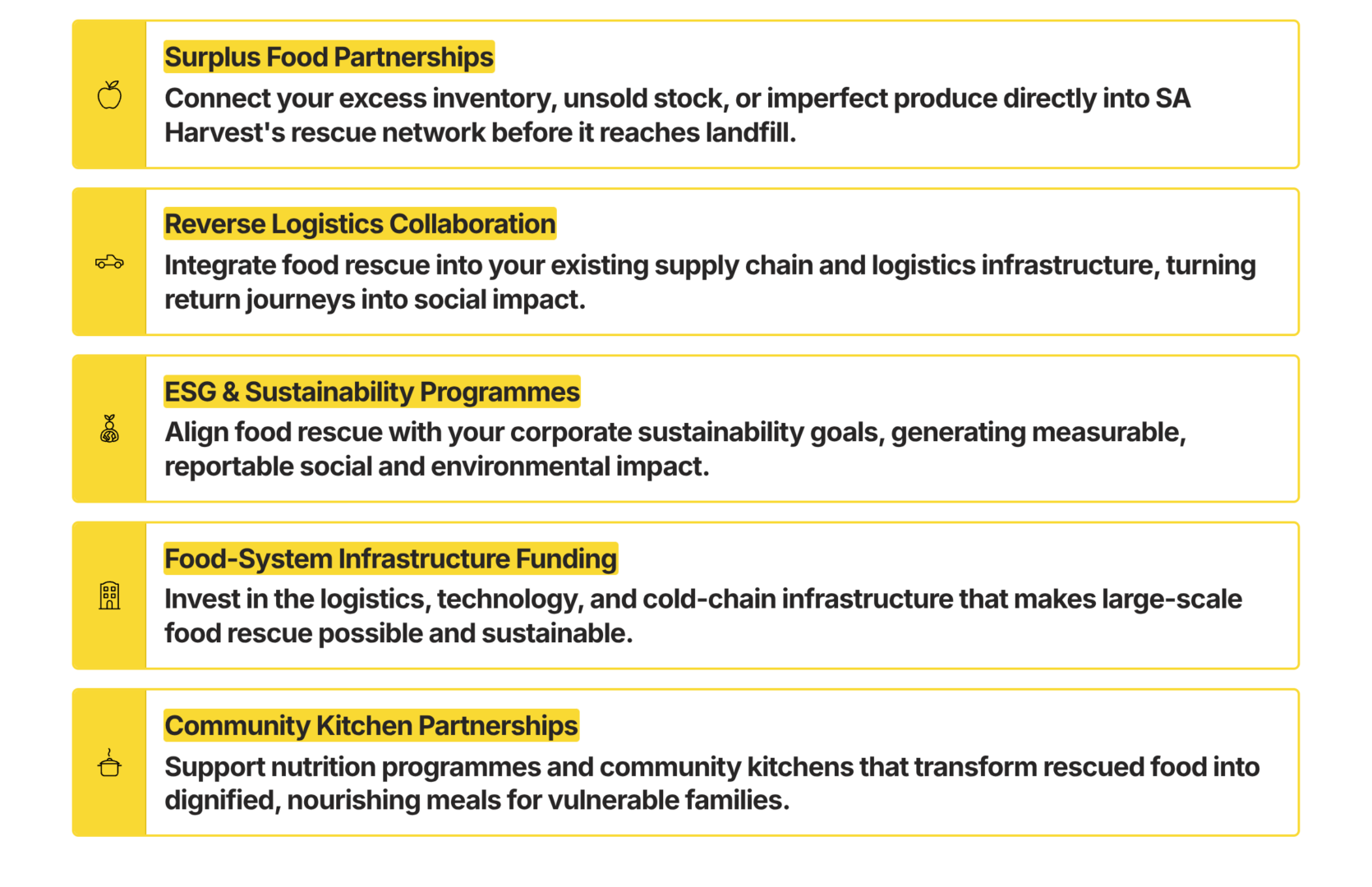
This is not simply charity. It is building the infrastructure that keeps South Africa nourished, resilient, and economically productive.
The Bigger Picture
If you would like to explore joining the SA Harvest ecosystem, please reach out or
Because solving hunger is not just about food.
It is about building the systems that move it.